close

May Newsletter

As May wraps up, here’s a look at what’s happening at NeuroNexus:

The end of our Bundles offer is approaching – make sure you have the tools you need for your summer research.

  • Fast delivery, in-stock arrays
  • Complete, integrated solutions: Electrode Arrays, Data Acquisition Systems, Software and Accessories
  • Tailored systems + Bundle discounts

Contact us to see how we can build a system for you.

Science Updates

Check out some of these publications featuring NeuroNexus products!

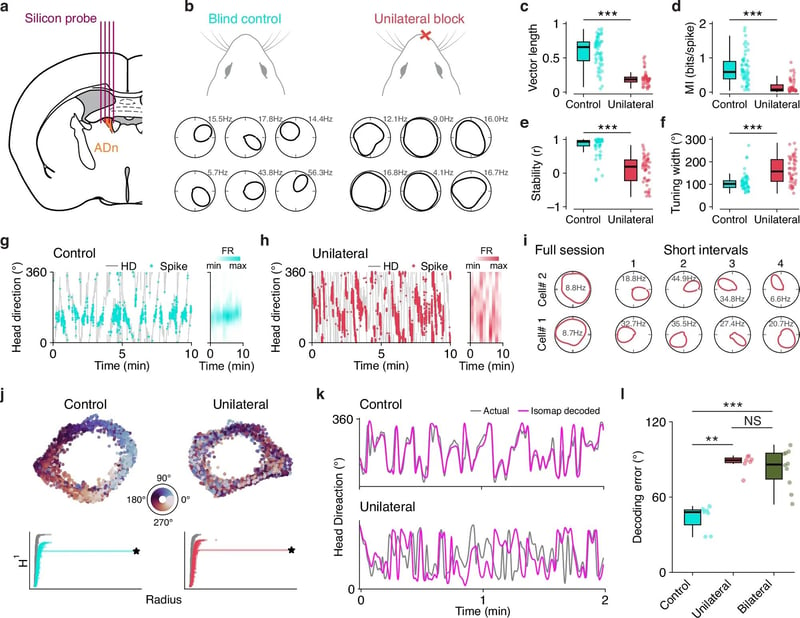
Stereo olfaction underlies stable coding of head direction in blind mice

Using NeuroNexus Buz32 and Buz64 multi-shank silicon probes, they recorded head direction cells in the anterior dorsal thalamus.

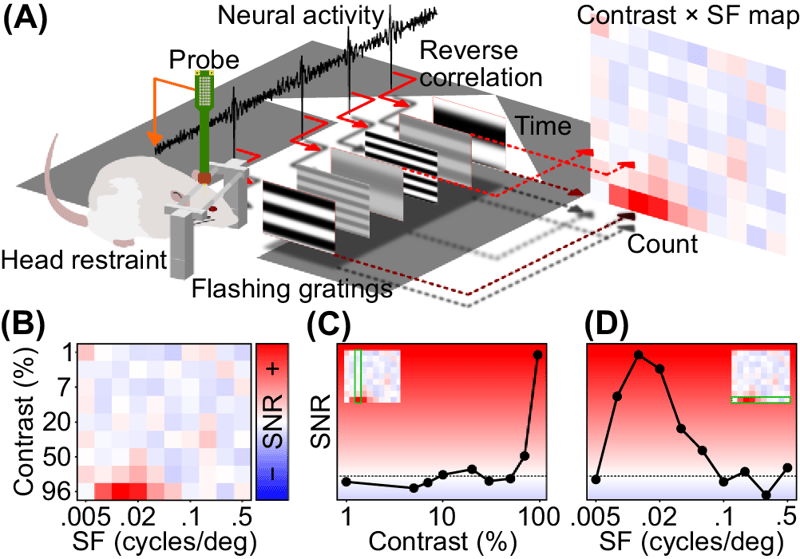
Perceptual visual acuity declines with age in a rat model of retinitis pigmentosa while light perception is maintained

Using NeuroNexus A2x16-10mm-100-500-413-A32 silicon probes, researchers recorded from visual cortex, dLGN, and SC, mapping the degeneration of form vision and preservation of light response at the neural level.


Want to see how other researchers are using NeuroNexus products?


Looking for the right probe or configuration for your next experiment? Bioz makes it easy to explore how other scientists are using NeuroNexus arrays, systems, and software in real-world research.

Staff Spotlight

This month, we’re featuring the awesome Bill Willis! He’s been with NeuroNexus for 9 years this August, and we’re so grateful for his dedication and the energy he brings to the team every day.

Bill is a Michigan native who spent part of his 20s in California and grew up on Big Wolf Lake in Jackson, MI. He’s married to Linda, and their daughter Amanda recently turned 32. A fan of adventure, Bill enjoys downhill skiing across CO, CA, and MI, has ridden over 100 roller coasters around the country, and is preparing for his 13th cruise (to Alaska this August!). He’s also a proud Disney fan, former semi-professional clown (stage name Bolly), and a talented graphic designer whose work appears on brochures, Radiens software, and even a billboard on I-94. His favorite places include Sedonaand New York, and his playlists are full of classic rock and 80s pop. Bill says his favorite part of working at NeuroNexus is “being part of a team that builds innovative products and services making a global impact.”


Stay connected – follow us on social for tools, tips, and a peek inside the NeuroNexus community.

February Newsletter

We are excited to present our February 2025 Monthly Roundup, designed to keep you informed about the latest advancements, product releases, and insights from NeuroNexus. Here’s a glimpse of what this edition offers:

1. Science Updates – Discover recent publications featuring NeuroNexus products:

  • Striatal Interneuron Imbalance and Sensory Processing in a Rodent Autism Model

  • Precise 3D Localization of Intracerebral Implants Using a Simple Brain Clearing Method

  • An Independent Coding Scheme for Distance versus Position in the Hippocampus

2. Product Spotlight: XDAQ Gen 2- Introducing the next generation in electrophysiology research:

  • XDAQ One+
    Offering unparalleled input-output flexibility, the XDAQ One+ supports 512 or 1024 recording channels and 64 or 128 channels of stimulation. It can drive up to four Neuropixels probes in a single, portable unit.

  • XDAQ Core2
    This versatile entry-level ephys hub supports high-quality recording up to 512 channels and electrical stimulation configurable to 16 or 32 channels. The enhanced version offers built-in support for Neuropixels right out of the box.

3. The Neuroscience of Valentine’s Day – In the spirit of Valentine’s Day, explore the fascinating science behind falling in love, from brain chemistry to emotional connections. This video delves into what really happens in your brain when love takes over.

4. Staff Spotlight: Dillon Kipke – Meet Dillon Kipke, a software engineer lead who has been with NeuroNexus for six years!

For more details and to access the full newsletter, click here.

To subscribe to the monthly newsletter, click here!

Stay tuned for more updates and innovations from NeuroNexus!

Your Monthly Roundup from NeuroNexus

Exploring Auditory Neuroscience at the Biennial Woods Hole Summer School: A Deep Dive into the Biology of the Inner Ear

Every two years, some of the brightest minds in auditory neuroscience gather at the Marine Biological Laboratory (MBL) in Woods Hole for an immersive, three-week course titled Biology of the Inner Ear (BIE). Since its inception in 2007, the course has offered graduate students and postdoctoral researchers from diverse scientific backgrounds—ranging from audiology to molecular biology and in vitro physiology—the opportunity to deepen their knowledge of auditory neuroscience through a combination of lectures, hands-on labs, and close interaction with world-renowned faculty​.

Dr. Peter Bremen led the course’s participants through an engaging and practical demonstration of in-vivo extracellular neurophysiology using the Mongolian gerbil. This portion of the course allowed students to conduct recordings from the inferior colliculus and auditory cortex while exposing the gerbils to auditory stimuli. “They obtained frequency tuning, level tuning, and amplitude-modulation tuning curves,” Dr. Bremen explained. “It was an excellent opportunity for them to learn about hardware components like pre-amps and AD converters, as well as stimulus generation, spike sorting, and data analysis.”

For many students, this was their first introduction to in-vivo neurophysiology. According to Dr. Bremen, the experience generated enthusiasm and many insightful questions from the students. “The students were very engaged, not only with the scientific aspects but also with the technical components of the rig setup, including the electrodes, hardware, and software,” he shared.

The Role of NeuroNexus in Supporting Advanced Research

NeuroNexus, a company known for its advanced neurophysiology tools, was instrumental in making this demonstration possible. Dr. Bremen, a long-time user of NeuroNexus products, emphasized their impact on his teaching and research. “I’ve used NeuroNexus electrodes for more than 10 years,” he shared. “Their recording quality is excellent, and the price is unbeatable. One of the things I particularly appreciate is the reusability of the electrodes without any loss in quality.”

For the 2024 course, NeuroNexus generously provided equipment, which allowed participants to gain hands-on experience with high-quality neurophysiology tools. “Without their support, the in-vivo demonstration wouldn’t have been possible,” Dr. Bremen noted. The use of NeuroNexus products not only enhanced the students’ technical skills but also provided them with insights into setting up and maintaining a fully functional electrophysiology rig.

A Collaborative Success

The Biology of the Inner Ear course is known for fostering close relationships between students and faculty, allowing for a collaborative learning environment. Reflecting on the success of the in-vivo demonstrations, Dr. Bremen was enthusiastic: “All in all, I think our demos were a great success and very informative for the students, many of whom had no prior experience with in-vivo neurophysiology.”

When asked if he would continue using NeuroNexus products in the future, Dr. Bremen’s response was emphatic: “Yes, definitely!”

The biennial Biology of the Inner Ear course continues to play a crucial role in training the next generation of auditory neuroscientists. Thanks to the collaboration between educators, researchers, and supporters like NeuroNexus, participants are gaining the skills and knowledge needed to make significant advancements in auditory science​.

Home | Marine Biological Laboratory

Science Market Update