March 2026 Newsletter
Spring Cleaning Inventory Sale
We’re offering significant discounts – up to 40% off – on our in-stock probes and electrode arrays. Act soon, as this offer is valid only through March 27th!
- Rapid Delivery: Same-day shipping on in-stock products.
- Affordable Excellence: Efficient manufacturing maintains competitive pricing.
- Proven Reliability: Trusted worldwide, featured in 5,000+ publications.
- Contact us to inquire
Product of the Month
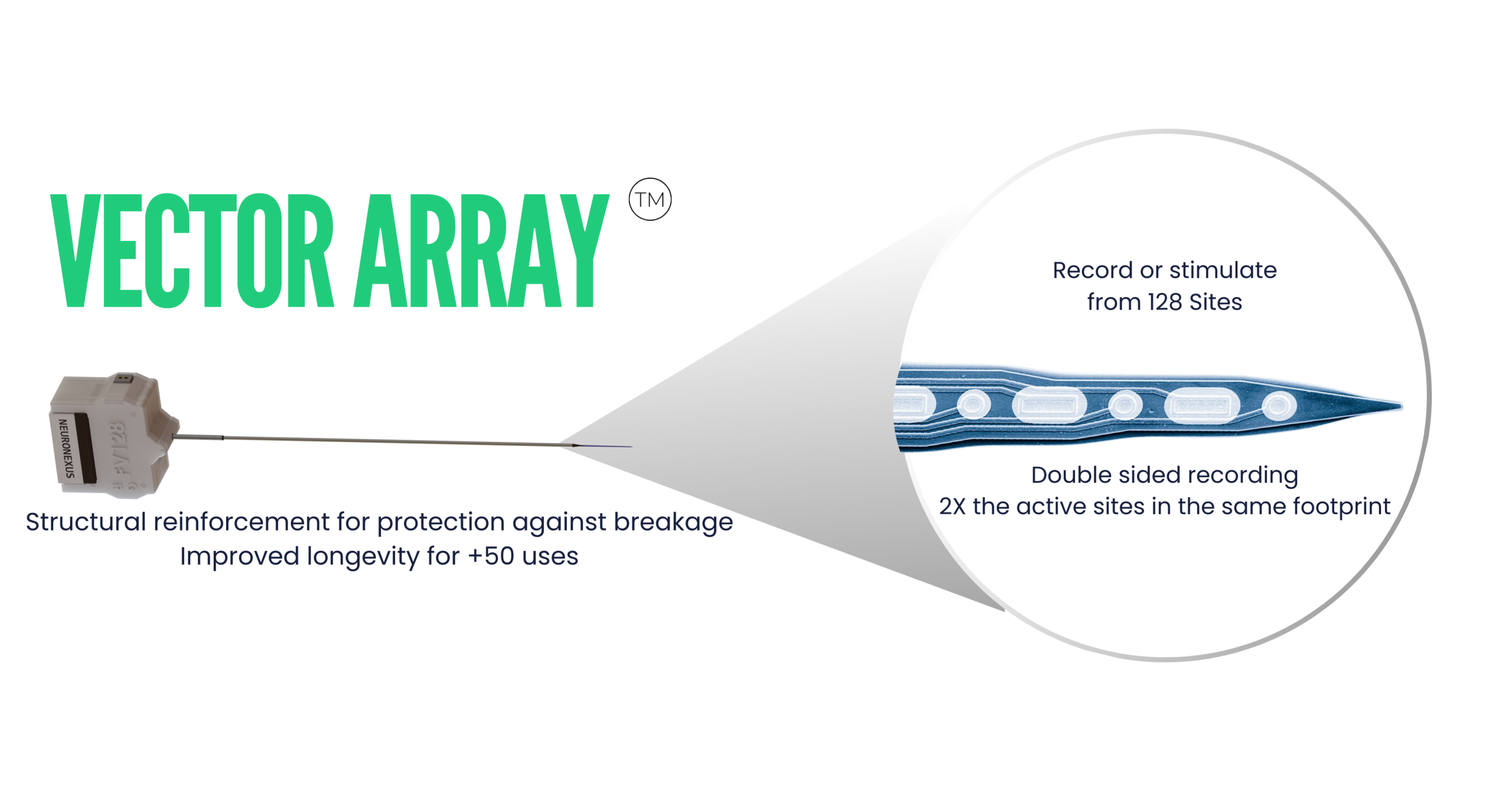
Application of Vector Probes
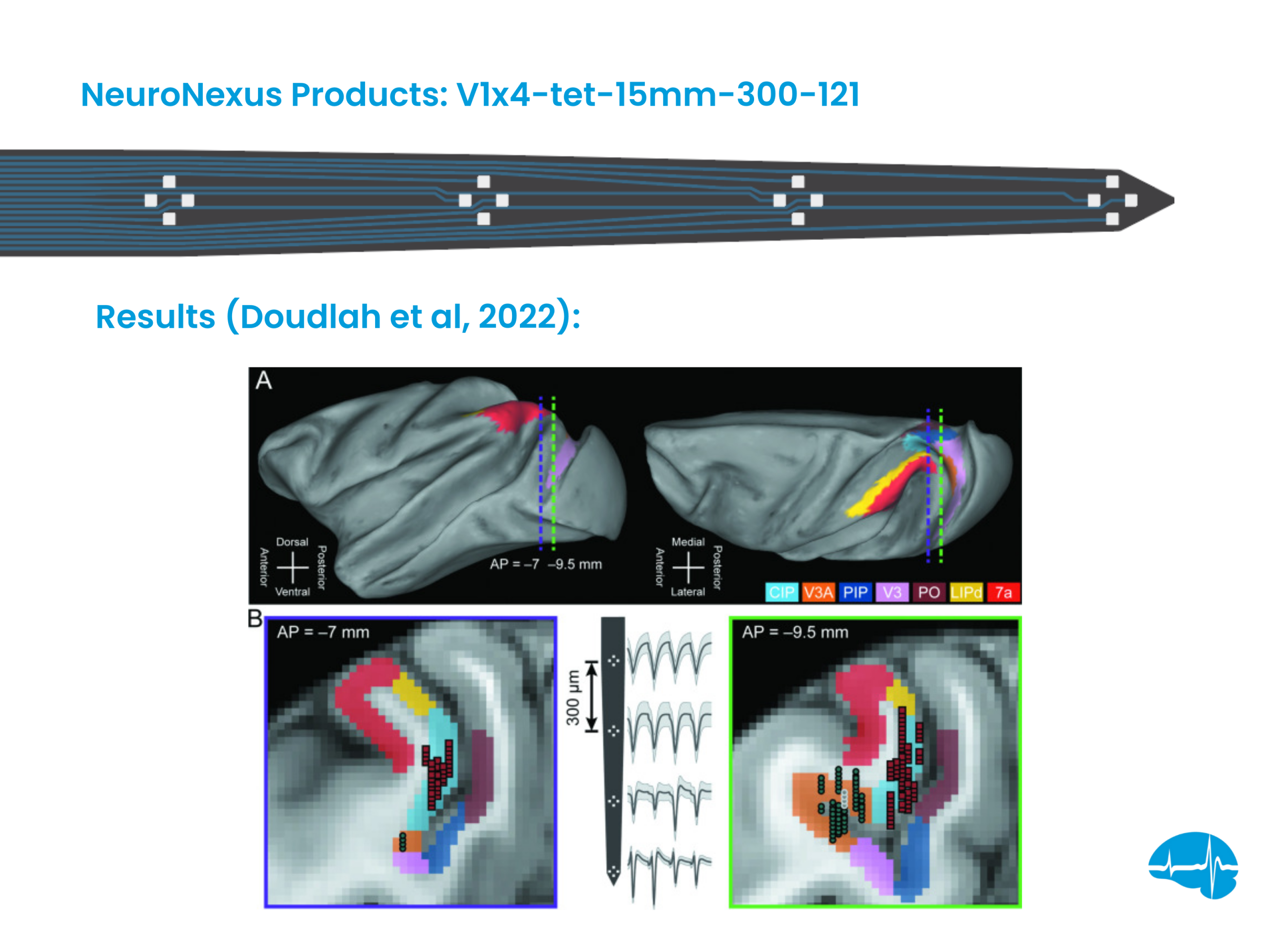
How does the brain transform ambiguous retinal images into object-specific spatial representations and couple sensory input with motor output? Research by Dr. Raymond Doudlah and colleagues from the Rosenberg Lab at the University of Wisconsin-Madison investigates two key regions that bridge the parieto-occipital junction in macaque monkeys: the intermediate visual area V3A and the caudal intraparietal (CIP) area. Their work aims to elucidate the mechanisms behind visual processing and sensorimotor integration in these areas.
NNx tools used
The team used 16 channel Vector Array probes (V1x4-Tet : V1x4-Tet-15mm-300-121-V16_100-50) for acute application in both the V3A and CIP.
Key Findings
- 3D Representations: Higher-level 3D representations and choice-related activity were more pronounced in the CIP area compared to V3A.
- Saccade-Related Activity: Both CIP and V3A exhibited saccade-related activity that could predict the direction and timing of eye movements.
- Temporal Alignment: The time course of saccade-related activity in CIP was synchronized with the temporally integrated output from V3A.
- Sensorimotor Associations: There were stronger sensorimotor associations between 3D orientation and saccade direction preferences in CIP than in V3A, influenced by choice signals in both areas.
Significance
- Understanding Parallel Representations: These results clarify the parallel representations, hierarchical transformations, and functional relationships between visual and saccade-related signals in the ‘where’ pathway.
- Challenging Classical Notions: The findings challenge traditional views on sensorimotor processing by showing that V3A also has saccade-related activity. This redefines its role as part of the association cortex and highlights the influence of choice-related activity in sensorimotor processing.
Read the study here: https://pmc.ncbi.nlm.nih.gov/articles/PMC9439678/
Additional studies using Vector arrays:
Chen et al. 2025: 10.1016/j.isci.2025.111936
Young et al. 2023: 10.1016/j.neuron.2023.07.01
Related Topics
February 2026 Newsletter
Science Showcase: Allego in Action Join …
Read publication