close

February 2026 Newsletter

Science Showcase: Allego in Action

Join us on February 19th at 11am ET for the first of a new webinar series where we’ll be showcasing real science using NeuroNexus products. In the first session of our webinar series, this Science Showcase will highlight researchers using Allego, the acquisition application in Radiens Suite, to explore fundamental questions in neural recording and analysis. Speakers will share how they design experiments, acquire high-quality neural data, and leverage real-time analytics and visualization to interrogate neural dynamics and broader biological hypotheses. Through these talks, you’ll see how integrated data acquisition and digital modeling tools in Allego support deeper scientific insight. Register here to save your spot!
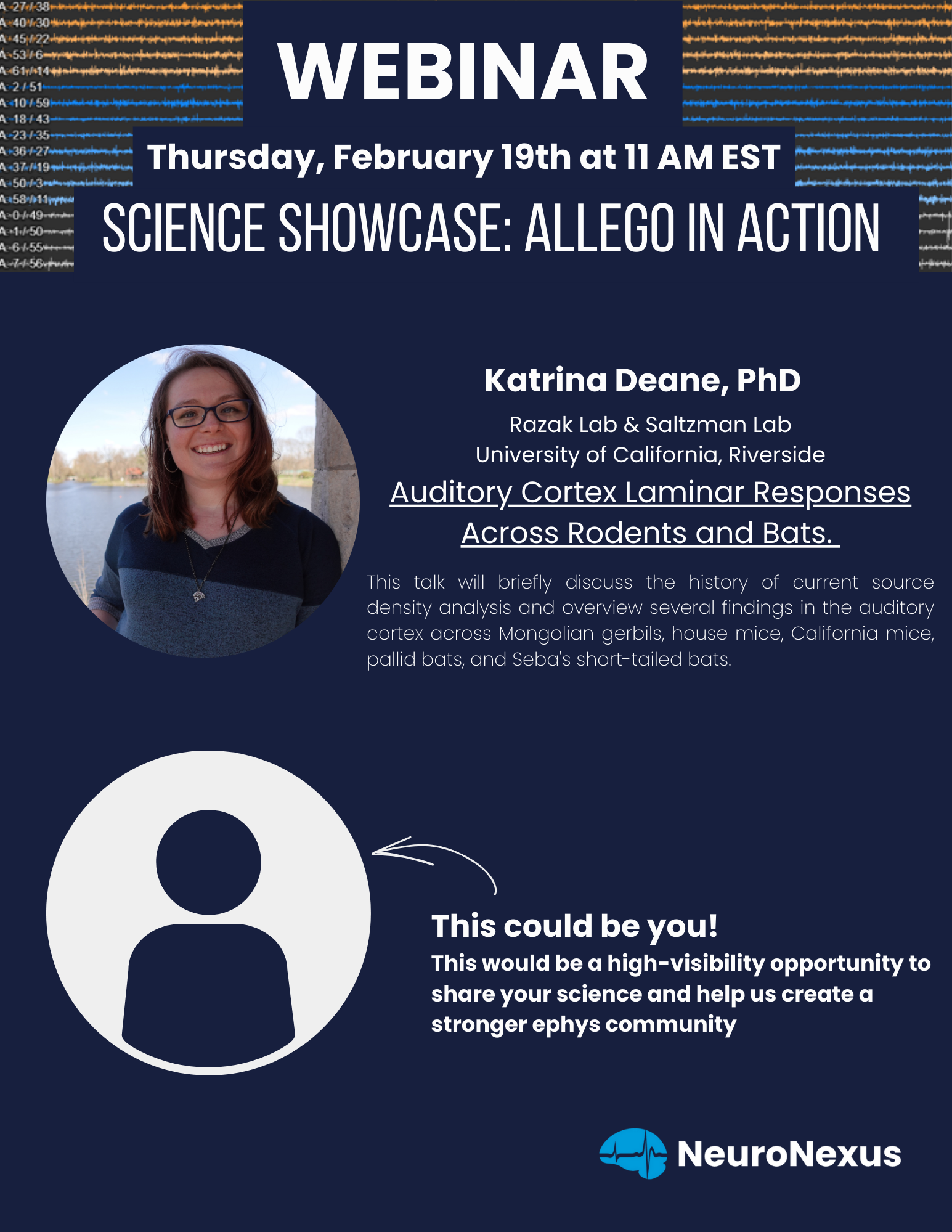
Additionally, we’re looking for more researchers to share their experience with Allego. If you’re interested in having your research showcased,please submit below and we’ll be in touch!

Apply to present

Reserve your spot

Meet our newest team member, Rosie!

Help us welcome Dr. Rosie Rae to the NNx team. Rosie is a tenacious, positive, and driven scientist with expertise in neurophysiology and data analysis. As an Application Scientist, she is passionate about rigorous, ethical science and committed to making complex research accessible and understandable for all audiences. Connect with Rosie here!

Product of the month: Allego
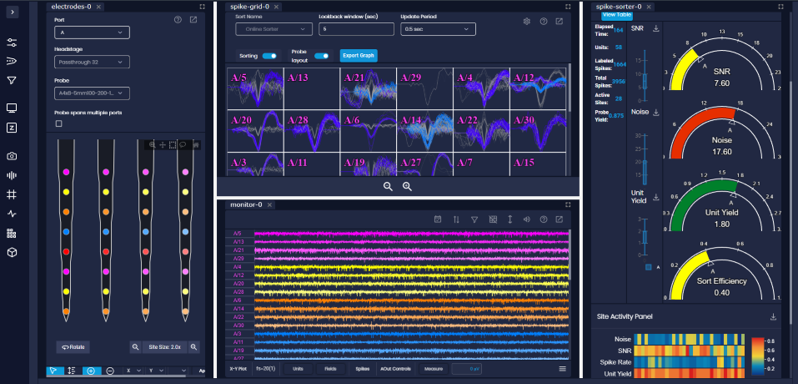
As the data aqcisition application within Radiens Suite, Allego provides DAQ hardware control with real-time analytics and visualization of both neural recordings and an innovative digital twin model of the neural interface.

  • Real-time 3D neural activity
  • Probe type specificity, individual channel readouts
  • Configuration of inrtacortical stimulation

Latest Version of Allego

  • Improved ease of installation
  • Improvements in signal metrics configuration, accuracy, and performance
  • 3D organoid model

Coming Soon: Tiered Software Update Channels

We are introducing tiered release channels for Allego, allowing users to select the update cadence and feature set that best aligns with their workflows and validation requirements.

Learn more about the Radiens Software Suite

Allego in Action

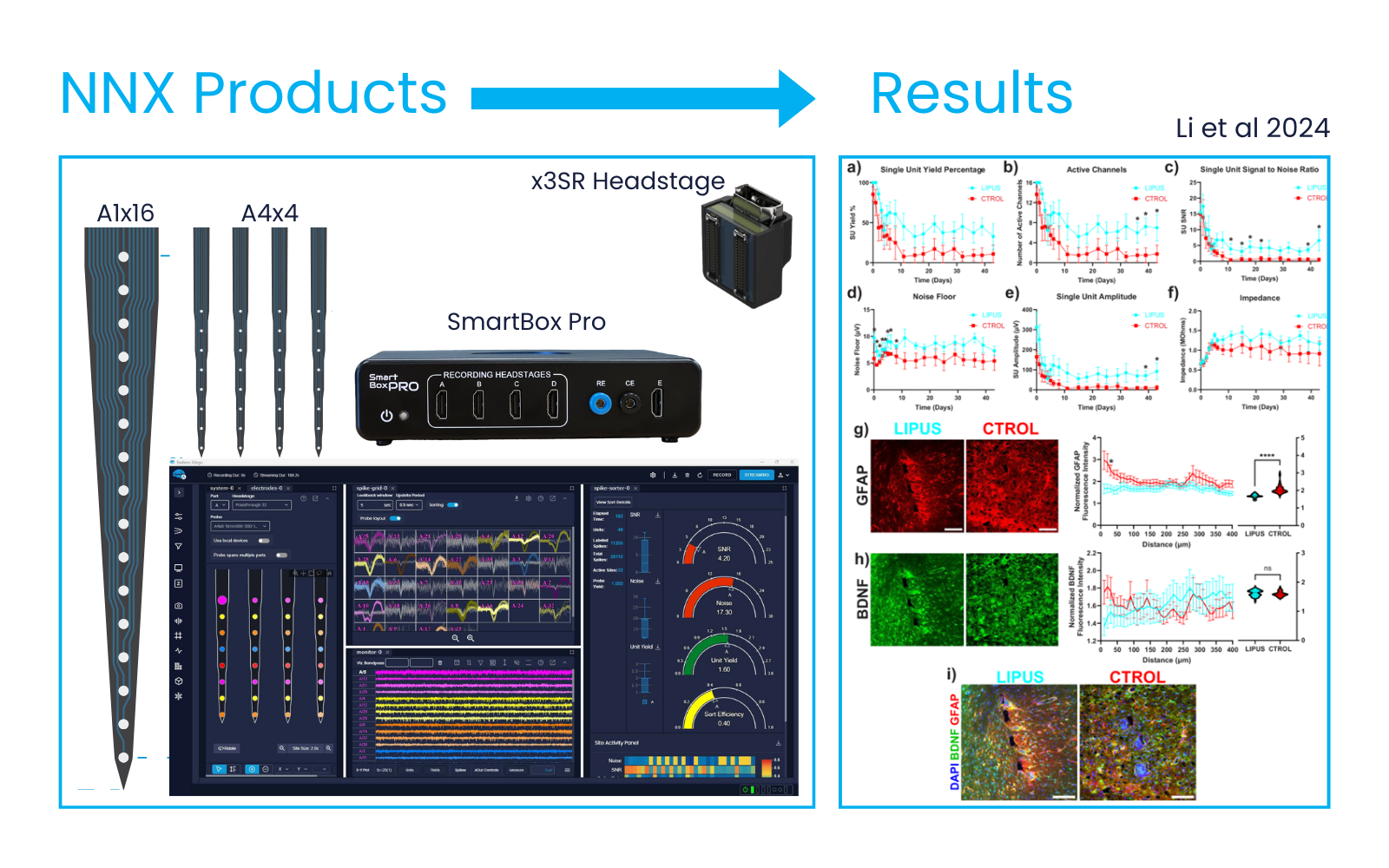
In this study, the team investigated the microglial inflammatory response to cortical electrode implantation – an important consideration, as these inflammatory cascades can impair the performance of intracortical brain-computer interfaces and intracranial electrophysiological recordings. They found that low-intensity pulsed ultrasound stimulation increased microglial migration speed, promoted microglial expansion, and reduced microglial activation, all of which point to improved tissue healing and surveillance. Additionally, ultrasound stimulation reduced microglial coverage of the electrode and limited astrocytic scarring, resulting in improved recording performance over time. Together, these findings suggest that low-intensity pulsed ultrasound can mitigate the foreign body response surrounding chronic intracortical microelectrodes and can yield better recording quality.

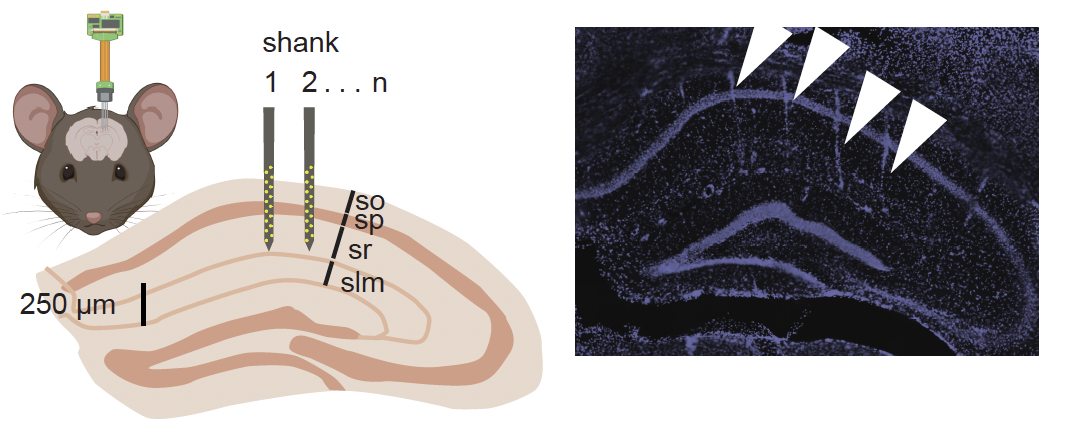
This study used a combination of NNx equipment including a passive single shank 16 channel microelectrode (A1x16) and an active four shank 16 channel microelectrode (A4x4), which were attached to a NNx headstage. All experimentation was recorded with a SmartBox Pro running Allego the acquisition application within NNx Radiens software.
Read Li et al 2024

Other articles using Allego

Deane et al. 2025 

Maslarova et al. 2025

December Newsletter

Winter inventory sale on in-stock probes

Reach out to your NeuroNexus representative or contact us here to take advantage of this opportunity, from now until the end of the year.

  • 15% off A-stock (order 5 or more probes for 25% off)

  • 20% off B-stock (order 5 or more probes for 30% off)

Visit the inventory store here

Science Updates

Spatiotemporal patterns differentiate hippocampus sharp-wave ripples from interictal epileptiform discharges in mice and humans

Maslarova, A., Shin, J.N., Navas-Olive, A. et al. Nat Commun (2025)

We’re excited to share this new research from Anna Maslarova, MD PhD and Jiyun Shin, PhD and the team at the Buzsáki lab and Liu lab at NYU Langone.

They developed a semi-automated analysis toolbox called ripmap, which uses low-dimensional embedding to separate event waveforms and reduce false positives in ripple detection, enhancing the reliability of detecting SPW-Rs in human hippocampal recordings. Better detection and classification of ripples vs. epileptiform discharges can improve both basic neuroscience research and clinical neurophysiology.

Using 8-shank, 1024-channel SiNAPS probes from NeuroNexus, the researchers captured high-resolution recordings from mouse hippocampus. Data were digitized with the Smartbox Pro and SiNAPS interface box and visualized using NeuroNexus Radiens Allego. We’re proud to see how NeuroNexus tools are helping researchers to push neuroscience forward!

Read the full study here

November Newsletter

SfN 2025

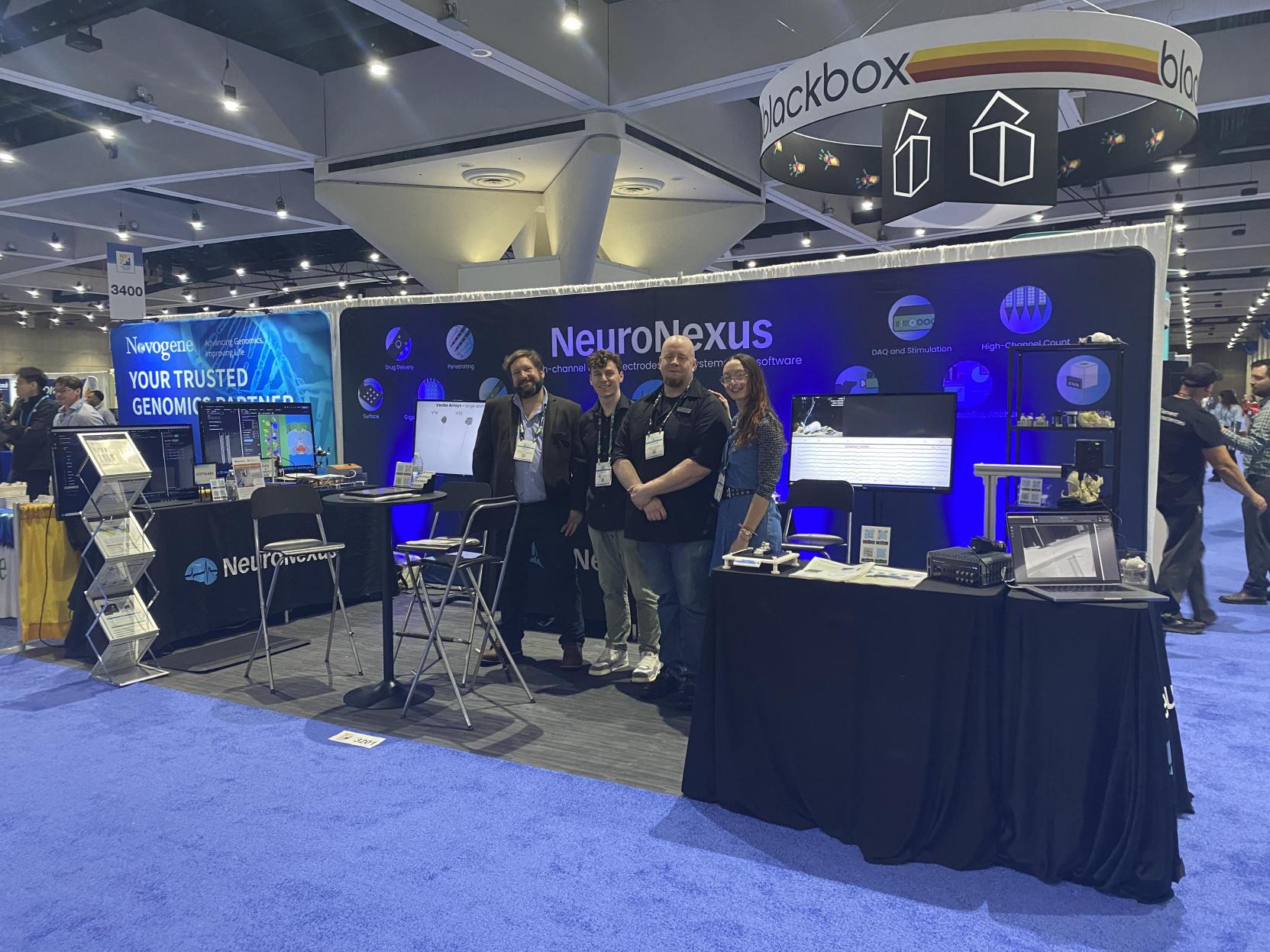
We had a great time chatting with everyone in San Diego this year!

If you were able to stop by, thank you so much – we truly enjoyed hearing about your research and discussing exciting new scientific approaches. If you didn’t get the chance to chat with us, or if you want to explore more, you can click the links below to learn more about our new products:

Additionally, we’re still running our SfN promotion (but not for long!). To take advantage of these deals, reach out to your NeuroNexus representative.

  • Buy 5 probes, get 1 free

  • Buy 10 probes, get 2 free

  • One free probe with the purchase of  Radiens Analytics Suite

  • 20% off NRE for custom probes

Science Updates

Auditory cortex neurons that encode negative prediction errors respond to omissions of sounds in a predictable sequence

Yaron et al., PLOS, 2025

The team used NeuroNexus 64-channel surface arrays to map click-evoked auditory responses in the rat auditory cortex.

Read the full study here

Presynaptic and postsynaptic determinants of claustro-cortical connectivity

de la Torre-Martínez, Roberto et al., Current Biology, 2025

The team used a 32-channel NeuroNexus silicon probe to record layer-specific cortical activity in awake mice while optogenetically stimulating claustral neurons.

Read the full study here

October Newsletter

Science Updates

Did you know that if you navigate to any product on our website, you can view publications using that product with the Bioz plug-in? Give it a try by following this link → https://www.neuronexus.com/products/

Once you select a product, scrolling to the lower portion of the page will show you a list of publications – making it easy to explore how other scientists are using NeuroNexus arrays, systems, and software in real-world research.

Explore Bioz here

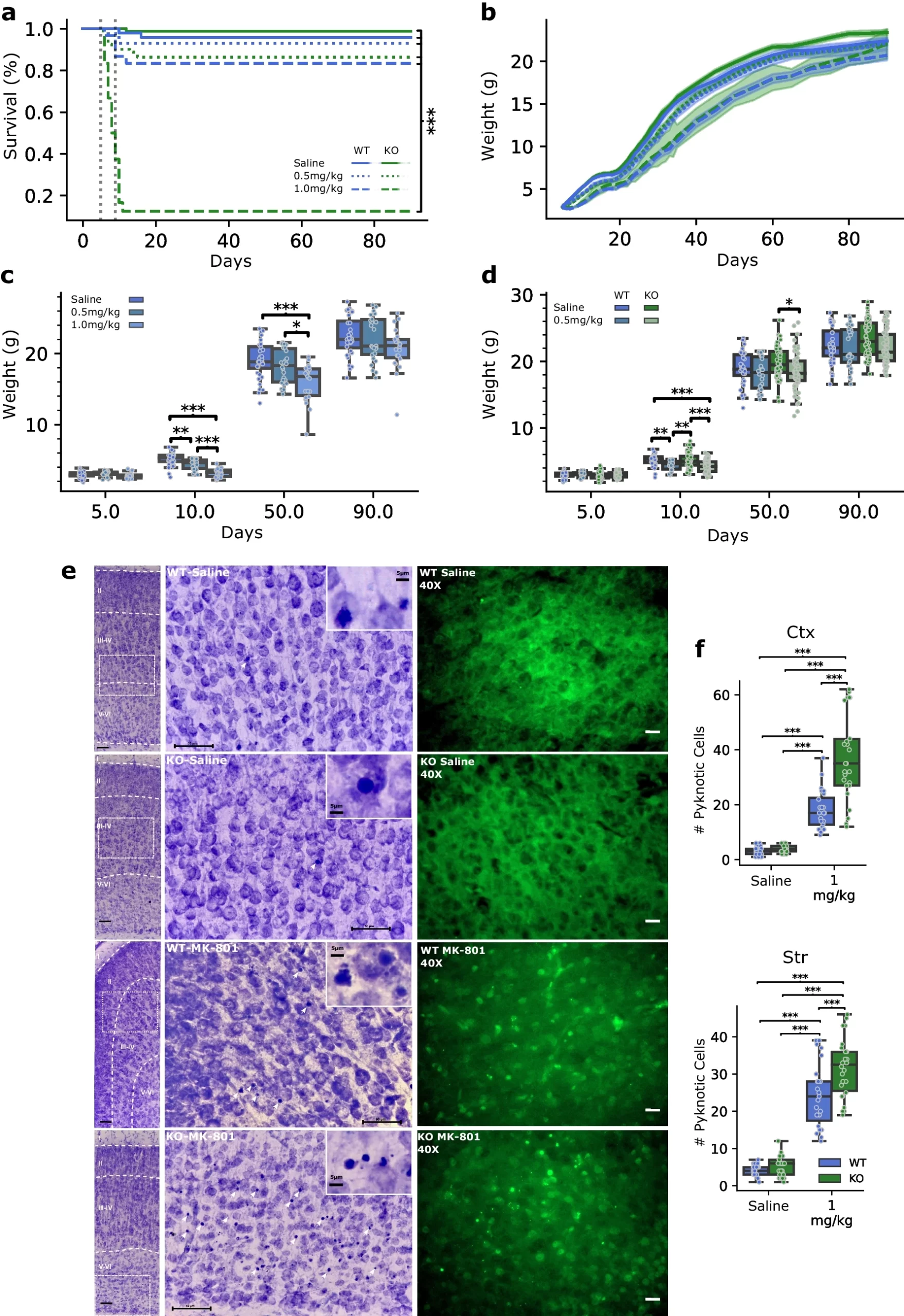
Acute and Long-Term Consequences of Neonatal NMDA Blockade in the Cx3cr1Knock-Out Mouse

Méndez et al, Inflammation (2025)

The team used a 32-channel, multi-shank silicon probe from NeuroNexus (A4x8-5mm-200-400-177) for recordings across hipppocampal regions.

Read more here

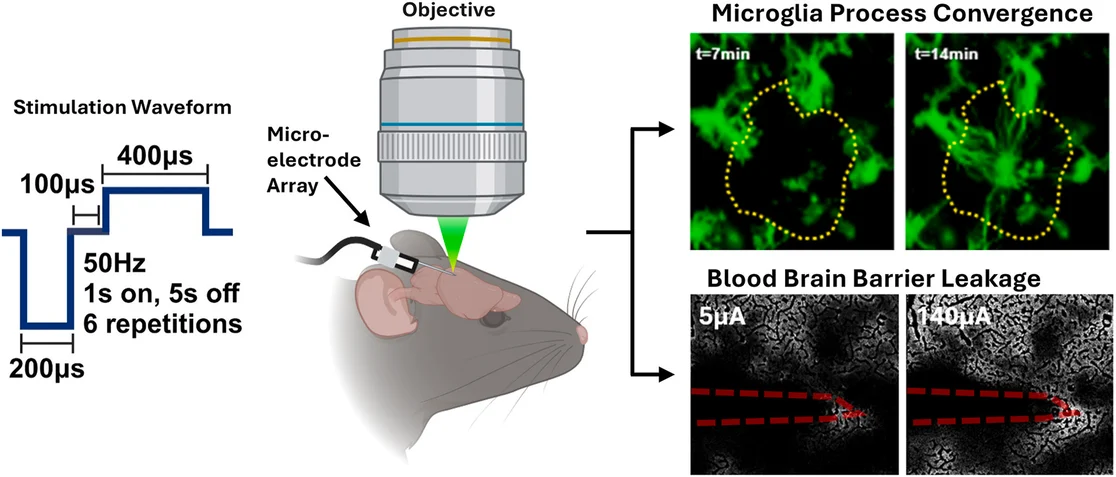
Intracortical microstimulation induces rapid microglia process convergence

Williams, N.P. et al, Biomaterials, 2026

Using NeuroNexus A1x16 microelectrode arrays, they showed how intracortical microstimulation drives rapid microglia responses – advancing our understanding of brain-immune interactions.

Read more here

Employee Spotlight: Doug Noss

This month, we’re featuring our fantastic R&D engineering tech, Doug Noss. Doug has been with NeuroNexus for nearly 5 years!


“I specialize in building and refining neural interface prototypes – bridging neuroscience and engineering through hands-on experimentation, 3D printing, and performance testing,” he says.


At work, Doug says that he loves “taking ideas from concept to reality – solving complex problems at the micro scale, where precision, patience, and creativity all come together.”


Doug told us a little bit about how he spends his time outside of work:


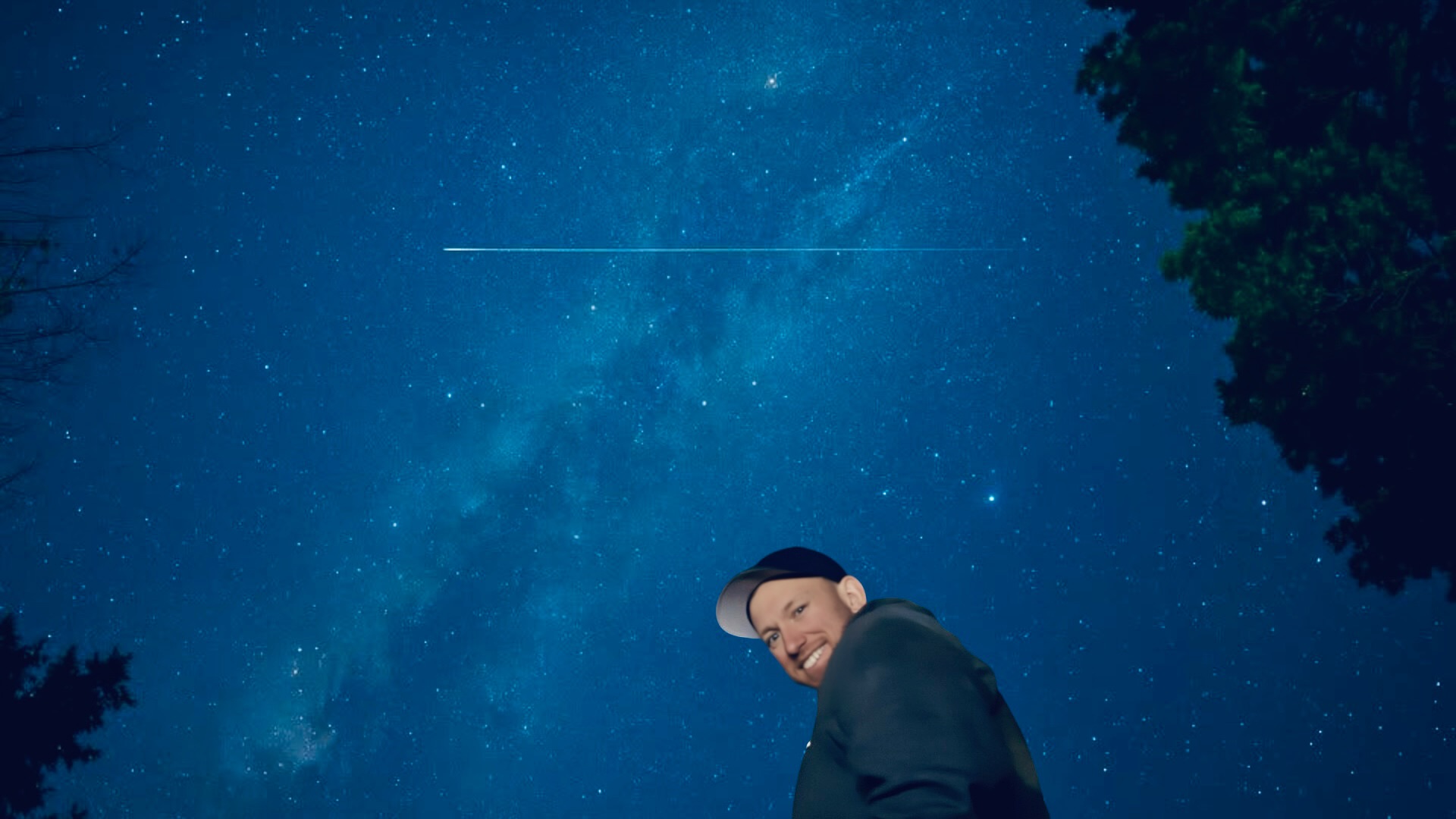
“I spend most of my free time with my love, Elizabeth, my dog Emma, my cat Lucy, and my sister Stacey. I also enjoy building things and doing astrophotography – capturing galaxies and nebulae keeps me grounded and reminds me that small details can reveal something vast.” In alignment with his interest in galaxies and nebulae, his favorite movie is Interstellar. “It blends science, emotion, and curiosity in a way that really connects with me,” he says, “the same mix that drives my work and hobbies.


A fun fact about Doug is that he’s restoring his 1858 farmhouse in Manchester, Michigan. “Every now and then I uncover hidden treasures,” he says, antique irons, old tools, and small pieces of history tucked away in the walls.”


Doug’s blend of creativity, technical skill, and genuine curiosity reminds us what makes this work so meaningful. We’re lucky to have him on the NeuroNexus team!

Coming soon…

For more than 20 years, NeuroNexus has been the leader in developing novel solutions for unique research requirements. With decades of collective experience, our team is always working to expand our product portfolio.

As SfN 2025 approaches, we’re excited to share the innovations we’ve been working on this year. Join us in San Diego to see our newest products and collaborations firsthand – and book time with our team now to explore how NeuroNexus can help take your science further.

September Newsletter

Back to School Sale – Ending September 19th

This is a great chance to get premium research tools at a discounted price – reply directly to this email, reach out to your NeuroNexus representative, or contact us here to inquire.

  • 20% off A-Stock probes

  • 30% off already discounted B-Stock probes

Browse the inventory here: https://shopping.neuronexus.com/Web-Store/Outlet-Store

Science Updates

Want to see how other researchers are using NeuroNexus products?

Did you know that if you navigate to any product on our website, you can view publications using that product with the Bioz plug-in? Give it a try by following this link → https://www.neuronexus.com/products/

Once you select a product, scrolling to the lower portion of the page will show you a list of publications – making it easy to explore how other scientists are using NeuroNexus arrays, systems, and software in real-world research. Explore Bioz

Predictive modeling of hemodynamics during viscerosensory neurostimulation vie neural computation mechanism in the brainstem

Lee et al., 2025, npj Digit.

The team explored how the brainstem’s nucleus tractus solitarius (NTS) translates sensory stimulation into changes in blood pressure and heart rate. They found that groups of NTS neurons follow clear activity patterns that can be used to predict cardiovascular responses. They used a NNx A1x16-Poly2 silicon probe. Read the study here

The dorsal and ventral hippocampus contribute differentially to spatial working memory and spatial coding in the prefrontal cortex

Babl et al., 2025, PLOS Biology

Researchers investigated how the dorsal and ventral hippocampus differentially contribute to spatial working memory and shape spatial coding in the prefrontal cortex. They did this using the NNx dDrive-m microdrive and NNx silicon probes (A1X16-5 mm-25–177-H16_21). Read the study here

Employee Spotlight: Engineering Tech Russ Monk!

This month we’re featuring Russ Monk, our awesome Engineering Tech. We’ve been lucky enough to have his expertise on the NeuroNexus team for 16 years!

Here at NeuroNexus, Russ is responsible for engineering all of the new designs and updates for PCBs, mounting IC chips on Smart Probes and Headstages, as well as assembling and testing the Smartbox Pro and Activus units. When asked about his favorite part of the job, he replied “the people I work with. I also hope we can help with understanding the brain better and the diseases that unfortunately are hinderances to people in everyday life”. 

Outside of work, Russ enjoys camping – “we have done the progression of starting out in small campers to now being considered ‘Glampers'”, he says. He’s visited many beautiful places in Michigan and across the US (fun fact – he’s swam in all 5 Great Lakes!) He cites some of his favorite movies to be comedies; Animal House, Caddyshack and We’re the Millers. “On a more serious note,” he says, “Shawshank Redemption”.

We’re grateful to Russ for his 16 years of expertise, dedication, and humor – and we’re proud to have him as part of the NeuroNexus family.

Coming soon…

For more than 20 years, NeuroNexus has been the leader in developing novel solutions for unique research requirements. With decades of collective experience, our team is always working to expand our product portfolio.

As SfN 2025 approaches, we’re excited to share the innovations we’ve been working on this year. Join us in San Diego to see our newest products and collaborations firsthand – and book time with our team now to explore how NeuroNexus can help take your science further.


August Newsletter

Welcome to the August edition of the NeuroNexus newsletter! Here’s what’s new and noteworthy this month:

Science Updates

Want to see how other researchers are using NeuroNexus products?

Did you know that if you navigate to any product on our website, you can view publications using that product with the Bioz plug-in? Give it a try by following this link → https://www.neuronexus.com/products/

Once you select a product, scrolling to the lower portion of the page will show you a list of publications – making it easy to explore how other scientists are using NeuroNexus arrays, systems, and software in real-world research.

Brain sources composing irregular field potentials have unique temporal signatures – Oscar Herreras, corresponding author

The team used NeuroNexus linear silicon probes with 16 or 32 recording sites to record high-resolution field potentials across multiple brain regions in anesthetized rats.

Read the study here

The neural circuit mechanism for auditory responses in the mediodorsal thalamic nucleus of awake mice –Ling Qin, corresponding author

Using NeuroNexus 16-channel probes (A1x16-3.8mm-50-177), the team identified phasic and sustained auditory responses shaped by brainstem and cortical inputs.

Read the study here

Late emergence of pathological oscillatory activity in the retina of the Retinitis pigmentosa model RCS (Royal College of Surgeons) rat – Frank Müller, corresponding author

With NeuroNexus adapters enabling intraretinal recordings from flexible Kiragami probes, researchers detected that retinal oscillations may interfere with retinal prostheses.

Read the study here

NeuroNexus Radiens Software Tutorials: Recording Settings

We’re launching a new video series to help you get the most out of Radiens. In each tutorial, we’ll walk through key features, tips, and workflows to accelerate your analysis.

This week’s video walks through the various recording settings in Allego. A variety of recording settings, all of which can be used alongside one another, allow you to meet your specific experimental needs. Watch the video here.

Employee spotlight: Andrea Worden


Meet Andrea Worden, our dedicated Senior Lab Tech who has been an essential part of the NeuroNexus team for an impressive 12 years. Andrea plays a key role in the development and assembly of both Optoelectrodes and traditional neural probes – work that Andrea says is “challenging at times, but also rewarding”.

Outside the lab, Andrea enjoys spending quality time with family and friends, and finds joy in walks along the Falling Waters Trail. Her favorite movie is “50 First Dates”, and her warm spirit brings positivity to every project she touches. We’re lucky to have Andrea’s experience and energy on the team!

July Newsletter

As July is wrapping up, here’s a look at what’s happening at NeuroNexus:

NeuroNexus Radiens Software Tutorials: Multiple Monitor View

We’re launching a new video series to help you get the most out of Radiens. In each tutorial, we’ll walk through key features, tips, and workflows to accelerate your analysis.

This video demonstrates how to view the same data in different ways using separate Monitor tabs, for example viewing spikes and LFPs simultaneously. Click here or click the thumbnail below to watch.


Science Updates

Check out some of these publications featuring NeuroNexus products!

Deciphering Auditory Hyperexcitability in Otgyl Mutant Mice Unravels an Auditory Neuropathy Mechanism 

Nicolas Michalski, corresponding author

Using NeuroNexus laminar probes, researchers recorded brain activity in Otogl mutant mice and identified a breakdown in how low-SR neurons process loud sounds. Read more

______________________________________________________________

Goal-specific hippocampal inhibition gates learning 

Annabelle C. Singer, corresponding author

The team used NeuroNexus Poly5 two-shank 64-channel silicone probes and matching 64-channel optoelectrodes, enabling high-density recording and optogenetic control of hippocampal ensembles during learning tasks. Read more

______________________________________________________________

Dexamethasone-loaded platelet-inspired nanoparticles improve intracortical microelectrode recording performance

Andrew Shoffstall, corresponding author – preprint

Using a NeuroNexus 16-channel single-shank intracortical microelectrode researchers demonstrated that dexamethasone-loaded nanoparticles significantly reduced inflammation, repaired the blood-brain barrier, and preserved neuron health, improving neural recording quality crucial for brain-machine interfaces. Read more

______________________________________________________________

Want to see how other researchers are using NeuroNexus products?

Looking for the right probe or configuration for your next experiment? Bioz makes it easy to explore how other scientists are using NeuroNexus arrays, systems, and software in real-world research. Explore Bioz here

June Newsletter

We hope you’ve had a great month of June! Here’s what’s happening at NeuroNexus:

NeuroNexus in Oslo for FENS

Last week, our own Dr. Rio Vetter traveled to Oslo, Norway for the FENS regional meeting to represent NeuroNexus. Thanks to everyone who stopped by our booth and chatted with us – it’s always great to connect with the neuroscience community.


Here’s how the Fusion Probe can change your research →

Are you limited by incomplete neural coverage? Fusion’s double-sided shank offers 360 degree coverage, capturing neural activity from all directions and providing an unbiased view of microcircuit dynamics with just one insertion.

Facing a complex setup? Fusion doubles the number of recording sites without requiring new hardware, headstones, or cables, streamlining your workflow effortlessly.

Concerned about efficient animal use in your experiments? Fusion provides richer, denser datasets per experiment, strengthening your statistical power while aligning with ethical standards (3Rs).

Struggling with compatibility issues in your existing workflows? Fusion integrates seamlessly into your current data analysis pipelines, supporting analyses from basic firing rates to advanced machine learning.

Learn more about the Fusion Probe here!

Science Updates

“Bacteria invade the brain following intracortical microelectrode implantation, inducing gut-brain axis disruption and contributing to reduced microelectrode performance”

Jeffrey R. Capadona, corresponding author 

 Utilizing NeuroNexus 16-channel single-shank silicon microelectrodes, the team detected microbial DNA sequences, including gut-related bacteria, at implant sites in mouse brains.

Read more

Whisking and locomotion are jointly represented in superior colliculus neurons 

Scott R. Pluta, corresponding author

Using a custom NeuroNexus 3-shank 128-channel silicon probe, researchers reveal how neurons in the mouse superior colliculus integrate whisker movement and running speed information.

Read more 

Want to see how other researchers are using NeuroNexus products? Bioz makes it easy to explore how other scientists are using NeuroNexus arrays, systems, and software in real-world research. Explore Bioz here. 

This month we’re featuring Andy Dwyer, our amazing senior assembly technician who has been with the NeuroNexus team for 14 years!

Is there a specific or product or service you specialize in here at NeuroNexus?

“Ddrives, Vectors, synapse probes and all high channel count probes.”

What is your favorite part of your job?

“Finding solutions to challenging problems.”

What is your favorite way to spend time outside of work?

“Hanging with my dog, ‘Fozzy.'”

What is your favorite book?

“‘Bad Chili’ by Joe R. Lansdale.”

Share a fun fact about you!

“I may have wire-bonded more devices than any single person on the planet.”