close

July Newsletter

As July is wrapping up, here’s a look at what’s happening at NeuroNexus:

NeuroNexus Radiens Software Tutorials: Multiple Monitor View

We’re launching a new video series to help you get the most out of Radiens. In each tutorial, we’ll walk through key features, tips, and workflows to accelerate your analysis.

This video demonstrates how to view the same data in different ways using separate Monitor tabs, for example viewing spikes and LFPs simultaneously. Click here or click the thumbnail below to watch.


Science Updates

Check out some of these publications featuring NeuroNexus products!

Deciphering Auditory Hyperexcitability in Otgyl Mutant Mice Unravels an Auditory Neuropathy Mechanism 

Nicolas Michalski, corresponding author

Using NeuroNexus laminar probes, researchers recorded brain activity in Otogl mutant mice and identified a breakdown in how low-SR neurons process loud sounds. Read more

______________________________________________________________

Goal-specific hippocampal inhibition gates learning 

Annabelle C. Singer, corresponding author

The team used NeuroNexus Poly5 two-shank 64-channel silicone probes and matching 64-channel optoelectrodes, enabling high-density recording and optogenetic control of hippocampal ensembles during learning tasks. Read more

______________________________________________________________

Dexamethasone-loaded platelet-inspired nanoparticles improve intracortical microelectrode recording performance

Andrew Shoffstall, corresponding author – preprint

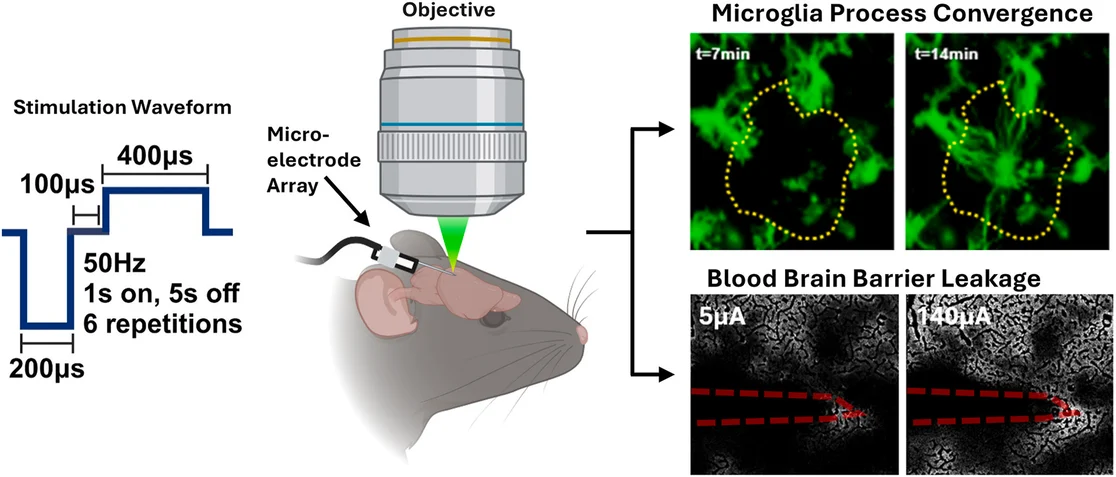
Using a NeuroNexus 16-channel single-shank intracortical microelectrode researchers demonstrated that dexamethasone-loaded nanoparticles significantly reduced inflammation, repaired the blood-brain barrier, and preserved neuron health, improving neural recording quality crucial for brain-machine interfaces. Read more

______________________________________________________________

Want to see how other researchers are using NeuroNexus products?

Looking for the right probe or configuration for your next experiment? Bioz makes it easy to explore how other scientists are using NeuroNexus arrays, systems, and software in real-world research. Explore Bioz here

June Newsletter

We hope you’ve had a great month of June! Here’s what’s happening at NeuroNexus:

NeuroNexus in Oslo for FENS

Last week, our own Dr. Rio Vetter traveled to Oslo, Norway for the FENS regional meeting to represent NeuroNexus. Thanks to everyone who stopped by our booth and chatted with us – it’s always great to connect with the neuroscience community.


Here’s how the Fusion Probe can change your research →

Are you limited by incomplete neural coverage? Fusion’s double-sided shank offers 360 degree coverage, capturing neural activity from all directions and providing an unbiased view of microcircuit dynamics with just one insertion.

Facing a complex setup? Fusion doubles the number of recording sites without requiring new hardware, headstones, or cables, streamlining your workflow effortlessly.

Concerned about efficient animal use in your experiments? Fusion provides richer, denser datasets per experiment, strengthening your statistical power while aligning with ethical standards (3Rs).

Struggling with compatibility issues in your existing workflows? Fusion integrates seamlessly into your current data analysis pipelines, supporting analyses from basic firing rates to advanced machine learning.

Learn more about the Fusion Probe here!

Science Updates

“Bacteria invade the brain following intracortical microelectrode implantation, inducing gut-brain axis disruption and contributing to reduced microelectrode performance”

Jeffrey R. Capadona, corresponding author 

 Utilizing NeuroNexus 16-channel single-shank silicon microelectrodes, the team detected microbial DNA sequences, including gut-related bacteria, at implant sites in mouse brains.

Read more

Whisking and locomotion are jointly represented in superior colliculus neurons 

Scott R. Pluta, corresponding author

Using a custom NeuroNexus 3-shank 128-channel silicon probe, researchers reveal how neurons in the mouse superior colliculus integrate whisker movement and running speed information.

Read more 

Want to see how other researchers are using NeuroNexus products? Bioz makes it easy to explore how other scientists are using NeuroNexus arrays, systems, and software in real-world research. Explore Bioz here. 

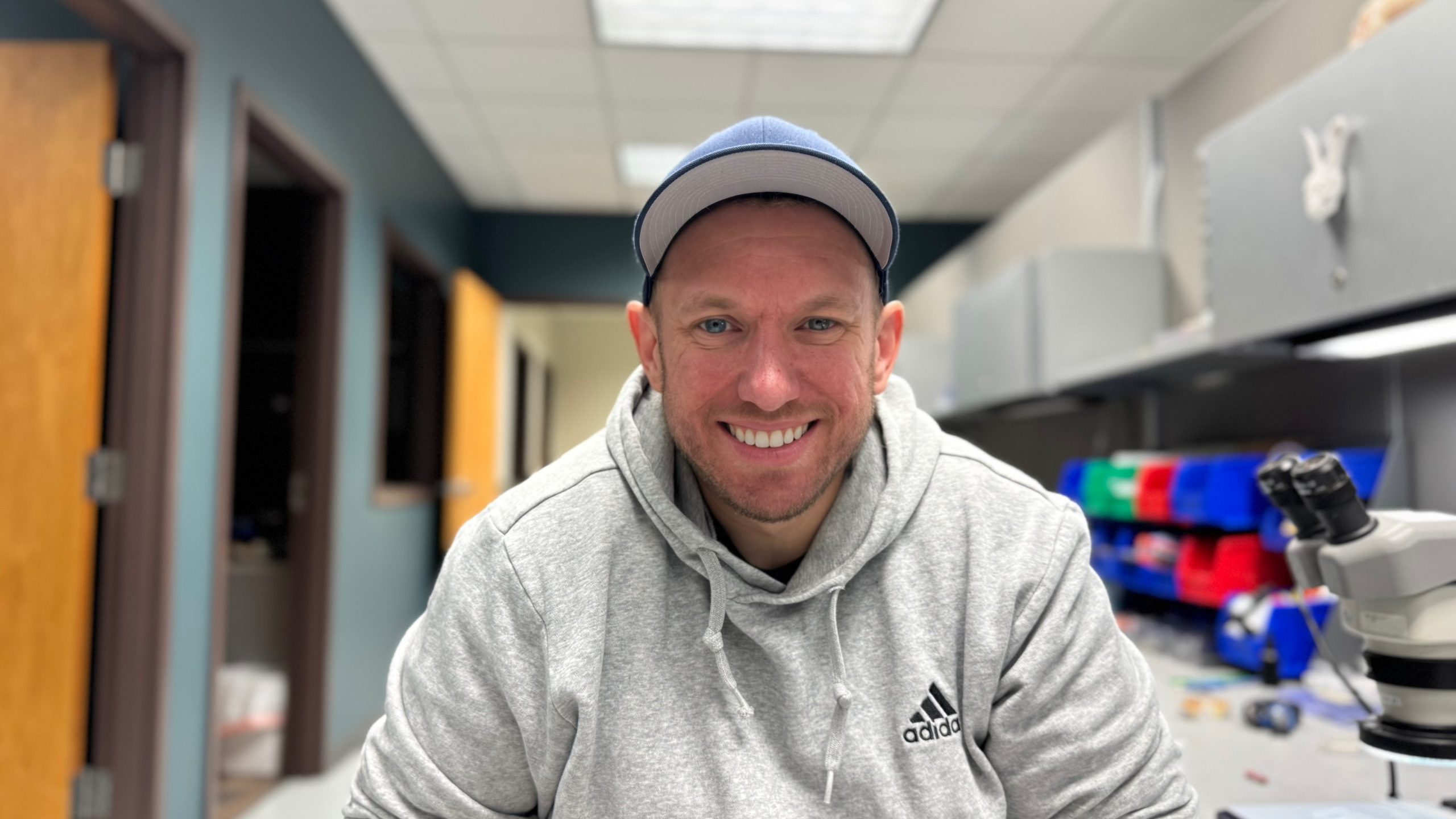
This month we’re featuring Andy Dwyer, our amazing senior assembly technician who has been with the NeuroNexus team for 14 years!

Is there a specific or product or service you specialize in here at NeuroNexus?

“Ddrives, Vectors, synapse probes and all high channel count probes.”

What is your favorite part of your job?

“Finding solutions to challenging problems.”

What is your favorite way to spend time outside of work?

“Hanging with my dog, ‘Fozzy.'”

What is your favorite book?

“‘Bad Chili’ by Joe R. Lansdale.”

Share a fun fact about you!

“I may have wire-bonded more devices than any single person on the planet.”

May Newsletter

As May wraps up, here’s a look at what’s happening at NeuroNexus:

The end of our Bundles offer is approaching – make sure you have the tools you need for your summer research.

  • Fast delivery, in-stock arrays
  • Complete, integrated solutions: Electrode Arrays, Data Acquisition Systems, Software and Accessories
  • Tailored systems + Bundle discounts

Contact us to see how we can build a system for you.

Science Updates

Check out some of these publications featuring NeuroNexus products!

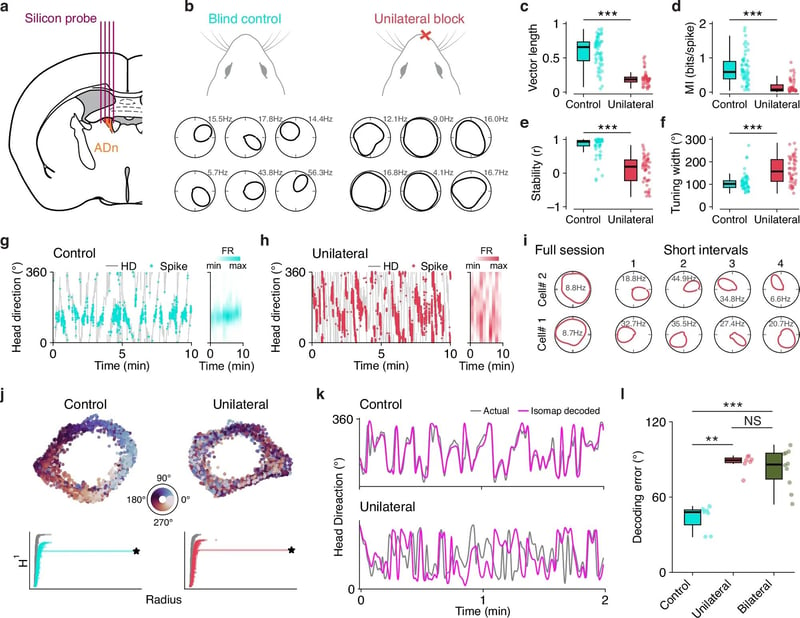
Stereo olfaction underlies stable coding of head direction in blind mice

Using NeuroNexus Buz32 and Buz64 multi-shank silicon probes, they recorded head direction cells in the anterior dorsal thalamus.

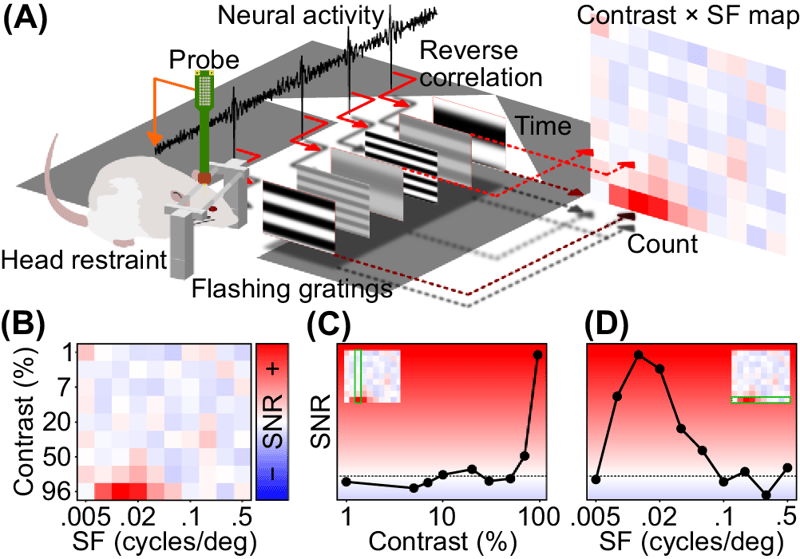
Perceptual visual acuity declines with age in a rat model of retinitis pigmentosa while light perception is maintained

Using NeuroNexus A2x16-10mm-100-500-413-A32 silicon probes, researchers recorded from visual cortex, dLGN, and SC, mapping the degeneration of form vision and preservation of light response at the neural level.


Want to see how other researchers are using NeuroNexus products?


Looking for the right probe or configuration for your next experiment? Bioz makes it easy to explore how other scientists are using NeuroNexus arrays, systems, and software in real-world research.

Staff Spotlight

This month, we’re featuring the awesome Bill Willis! He’s been with NeuroNexus for 9 years this August, and we’re so grateful for his dedication and the energy he brings to the team every day.

Bill is a Michigan native who spent part of his 20s in California and grew up on Big Wolf Lake in Jackson, MI. He’s married to Linda, and their daughter Amanda recently turned 32. A fan of adventure, Bill enjoys downhill skiing across CO, CA, and MI, has ridden over 100 roller coasters around the country, and is preparing for his 13th cruise (to Alaska this August!). He’s also a proud Disney fan, former semi-professional clown (stage name Bolly), and a talented graphic designer whose work appears on brochures, Radiens software, and even a billboard on I-94. His favorite places include Sedonaand New York, and his playlists are full of classic rock and 80s pop. Bill says his favorite part of working at NeuroNexus is “being part of a team that builds innovative products and services making a global impact.”


Stay connected – follow us on social for tools, tips, and a peek inside the NeuroNexus community.

February Newsletter

We are excited to present our February 2025 Monthly Roundup, designed to keep you informed about the latest advancements, product releases, and insights from NeuroNexus. Here’s a glimpse of what this edition offers:

1. Science Updates – Discover recent publications featuring NeuroNexus products:

  • Striatal Interneuron Imbalance and Sensory Processing in a Rodent Autism Model

  • Precise 3D Localization of Intracerebral Implants Using a Simple Brain Clearing Method

  • An Independent Coding Scheme for Distance versus Position in the Hippocampus

2. Product Spotlight: XDAQ Gen 2- Introducing the next generation in electrophysiology research:

  • XDAQ One+
    Offering unparalleled input-output flexibility, the XDAQ One+ supports 512 or 1024 recording channels and 64 or 128 channels of stimulation. It can drive up to four Neuropixels probes in a single, portable unit.

  • XDAQ Core2
    This versatile entry-level ephys hub supports high-quality recording up to 512 channels and electrical stimulation configurable to 16 or 32 channels. The enhanced version offers built-in support for Neuropixels right out of the box.

3. The Neuroscience of Valentine’s Day – In the spirit of Valentine’s Day, explore the fascinating science behind falling in love, from brain chemistry to emotional connections. This video delves into what really happens in your brain when love takes over.

4. Staff Spotlight: Dillon Kipke – Meet Dillon Kipke, a software engineer lead who has been with NeuroNexus for six years!

For more details and to access the full newsletter, click here.

To subscribe to the monthly newsletter, click here!

Stay tuned for more updates and innovations from NeuroNexus!

Your Monthly Roundup from NeuroNexus

Intern Spotlight: A Transformative Journey in Neurotechnology

We are thrilled to share the incredible journey of Baptiste Tankwa, who recently completed his Leadership-In-Action (LIA) internship with us. Over the course of just two months, Baptiste immersed himself in the challenges and opportunities of developing innovative neural implants to address neurodegenerative diseases.

🔬 A Dive into Neurotechnology
From designing new neural implant concepts to engaging with multidisciplinary teams, Baptiste showcased exceptional dedication. He collaborated with leading professors, engineers, and technicians to understand the profound potential of translating technology from the lab to the market.

🤝 Challenges & Growth
Baptiste navigated cultural and professional challenges with remarkable adaptability. From adjusting to a fast-paced American work culture to mastering communication with diverse stakeholders, his experience epitomizes resilience and passion for innovation.

🚀 Looking Ahead
As Baptiste embarks on his next chapter in the Neuro-X master’s program at EPFL, we are confident he will continue pushing the boundaries of medical solutions for neurodegenerative diseases. His vision to bridge the gap between research and patient care inspires us all.

Thank you, Baptiste, for your hard work and dedication. We are proud to have been a part of your journey and can’t wait to see what you achieve next!

NeuroNexus Engineering Team

Read Baptiste’s report here!

Exploring Auditory Neuroscience at the Biennial Woods Hole Summer School: A Deep Dive into the Biology of the Inner Ear

Every two years, some of the brightest minds in auditory neuroscience gather at the Marine Biological Laboratory (MBL) in Woods Hole for an immersive, three-week course titled Biology of the Inner Ear (BIE). Since its inception in 2007, the course has offered graduate students and postdoctoral researchers from diverse scientific backgrounds—ranging from audiology to molecular biology and in vitro physiology—the opportunity to deepen their knowledge of auditory neuroscience through a combination of lectures, hands-on labs, and close interaction with world-renowned faculty​.

Dr. Peter Bremen led the course’s participants through an engaging and practical demonstration of in-vivo extracellular neurophysiology using the Mongolian gerbil. This portion of the course allowed students to conduct recordings from the inferior colliculus and auditory cortex while exposing the gerbils to auditory stimuli. “They obtained frequency tuning, level tuning, and amplitude-modulation tuning curves,” Dr. Bremen explained. “It was an excellent opportunity for them to learn about hardware components like pre-amps and AD converters, as well as stimulus generation, spike sorting, and data analysis.”

For many students, this was their first introduction to in-vivo neurophysiology. According to Dr. Bremen, the experience generated enthusiasm and many insightful questions from the students. “The students were very engaged, not only with the scientific aspects but also with the technical components of the rig setup, including the electrodes, hardware, and software,” he shared.

The Role of NeuroNexus in Supporting Advanced Research

NeuroNexus, a company known for its advanced neurophysiology tools, was instrumental in making this demonstration possible. Dr. Bremen, a long-time user of NeuroNexus products, emphasized their impact on his teaching and research. “I’ve used NeuroNexus electrodes for more than 10 years,” he shared. “Their recording quality is excellent, and the price is unbeatable. One of the things I particularly appreciate is the reusability of the electrodes without any loss in quality.”

For the 2024 course, NeuroNexus generously provided equipment, which allowed participants to gain hands-on experience with high-quality neurophysiology tools. “Without their support, the in-vivo demonstration wouldn’t have been possible,” Dr. Bremen noted. The use of NeuroNexus products not only enhanced the students’ technical skills but also provided them with insights into setting up and maintaining a fully functional electrophysiology rig.

A Collaborative Success

The Biology of the Inner Ear course is known for fostering close relationships between students and faculty, allowing for a collaborative learning environment. Reflecting on the success of the in-vivo demonstrations, Dr. Bremen was enthusiastic: “All in all, I think our demos were a great success and very informative for the students, many of whom had no prior experience with in-vivo neurophysiology.”

When asked if he would continue using NeuroNexus products in the future, Dr. Bremen’s response was emphatic: “Yes, definitely!”

The biennial Biology of the Inner Ear course continues to play a crucial role in training the next generation of auditory neuroscientists. Thanks to the collaboration between educators, researchers, and supporters like NeuroNexus, participants are gaining the skills and knowledge needed to make significant advancements in auditory science​.

Home | Marine Biological Laboratory

Science Market Update

7 Years Later: Revolutionizing Neural Research with SiC

NeuroNexus is committed to continuous improvement to uphold the highest quality standards and ensure our customers remain at the forefront of scientific advancement. In 2017, driven by innovation, we introduced amorphous silicon carbide (a-SiC) into specific probe designs that demanded longer implant times, leveraging its superior dielectric properties. For this reason, a-SiC is well-suited for the time spans typically required in chronic non-human primate studies.

By 2022, we had developed an in-house process to deposit a-SiC, subsequently replacing SiO2 across all silicon probes. This development was a result of our Phase I NIH SBIR initiative, titled “Advanced three-dimensional microscale electrode array for high-density volumetric neural interfacing.” Beyond serving as an exceptional insulator and boasting excellent biocompatibility—essential for chronic implants—a-SiC surpasses SiO2 with its higher breakdown voltage, important for stimulation, and higher fracture resistance.

Incorporating a-SiC into our probe technology marks a significant advancement in our pursuit of innovative neural interface solutions. This transition underscores our commitment to pushing boundaries in neural research, ensuring reliability and performance in long-term scientific investigations.

A brief history of electrode technology

Our history of microelectrode technology starts in the 1950s.  

It wasn’t until 1953 that the first glass pipet microelectrode was used for extracellular recording (Rose, Science 1953). The glass pipette had a platinum wire inside, and it had a 10-micron tip. From there, there was a big development where Hubel developed the first microwire-based electrode (Hubel, Science 1957). This was a significant improvement because of the mechanical durability of wires compared to glass. He was able to record from the cat dorsal root for periods up to an hour. Later in that decade, Strumwasser reported using the first microwire bundle, an array consisting of four wires (Strumwasser, Science 1958). He was able to record for up to seven days.  

Those involved in operant conditioning studies may be familiar with the Olds work from 1965 which used nine nichrome wires for recordings lasting up to seven days and with 50% yield of action potentials (Olds, Brain Research 1965). In 1967, Naka reported the use of tungsten microwires (Naka, Brain Research 1967). These were 127-micron diameter with 1-micron tips, and he was able to record up to one month with them. 

In 1969 there began a revolution.  

Wise reimagined what a neural electrode would look like, using silicon as a substrate and using MEMS-based technologies (Wise, Conf on Engineering in Med and Biol 1969). His was the first report of an electrode developed with silicon substrate and silicon dioxide dielectrics. Then, in 1971, the National Institutes of Health (NIH) formed the Neural Prosthesis Program to push the field forward by bringing researchers together to collaborate and to disseminate new developments within the area of neural engineering and neural interfaces. In 1973, the Bak electrode was reported, contributing the first flexible interconnect for microelectrode packaging (Salcman & Bak, IEEE Trans BME 1973). Schmidt then reported recordings with iridium wires coated with parylene C. He was able to record 223 days (about 7 and a half months) in monkey cortex (Schmidt, Experimental Biology 1976). Finally, in 1988 was the first report of the Michigan probe, a silicon probe in vivo (Drake et al., IEEE Trans BME 1988), which demonstrated the value of a laminar array: simultaneous recordings at multiple depths. 

In 1994, the Center for Neural Communication Technologies (CNCT) was launched. This was an NIH-funded center that was in place for 10 years. It really amplified the efforts that were put into developing and refining the silicon probe technology, with a focus on acute probes. Acute probes are used temporarily and then taken out of the subject. The goal of CNCT was to disseminate silicon probes throughout the world for researchers that could use them. 

Williams tested chronically implanted silicon probes in 1999 (Williams & Kipke, Brain Res Prot 1999). This work brought into context the electrode-electrolyte interface, as well as the value of impedance spectroscopy, which was used to understand that the failure mechanisms of silicon probes are both device or abiotic failure and biological foreign body response or biotic failure. Then, in 2003 and 2004 Kipke and Vetter reported the first chronic performance assessment of the Michigan probe, and were able to get reliable recordings for fifty-five weeks (over 1 year) in rats (Kipke & Vetter, IEEE Neural Sys & Rehab Eng 2003; Vetter & Kipke, IEEE Trans BME 2004). 

In 2004, NeuroNexus was officially launched. 


Summary:
 

  • 1953 = first glass pipet microelectrode for extracellular recording  
  • 1957 = first microwire-based electrode, one hour recording 
  • 1958 = first microwire bundle (4 wires), 7 days recording 
  • 1965 = nichrome wire bundle (9 wires), 7 days recording 
  • 1967 = tungsten microwires, 1 month recording 
  • 1969 = silicon, MEMS-based technology 
  • 1971 = NIH Neural Prosthesis Pogram 
  • 1973 = flexible interconnect packaging 
  • 1976 = parylene C-coated iridium wires, 7+ months recording 
  • 1988 = silicon probe 
  • 1994 = CNCT launched with acute silicon probes 
  • 1999 = chronic silicon probes 
  • 2003-4 = chronic silicon probes, 12+ months recording 
  • 2004 = NeuroNexus