What’s New at NeuroNexus
Six releases since 2023, from Z-Coat™ site coating to the organoid electrophysiology system launching now, each dated below.
22 years
Making thin-film neural probes since 2004
5,000+ publications
Peer-reviewed work citing NeuroNexus electrodes
1,000+ labs
On six continents
4 to 1,024+ channels
From a single tetrode to SiNAPS, in the catalog
The record
Capability releases since 2004. Each recent entry opens the page that carries it.
- Organoid electrophysiology systemLaunching now
Penetrating 3-D recording inside brain organoids, with Radiens spike sorting, burst metrics, spectral power and cross-organoid synchrony.

Acquisition, analysis and curation in one release, with Radiens Vantage™ real-time monitoring of any DAQ stream at Pro.

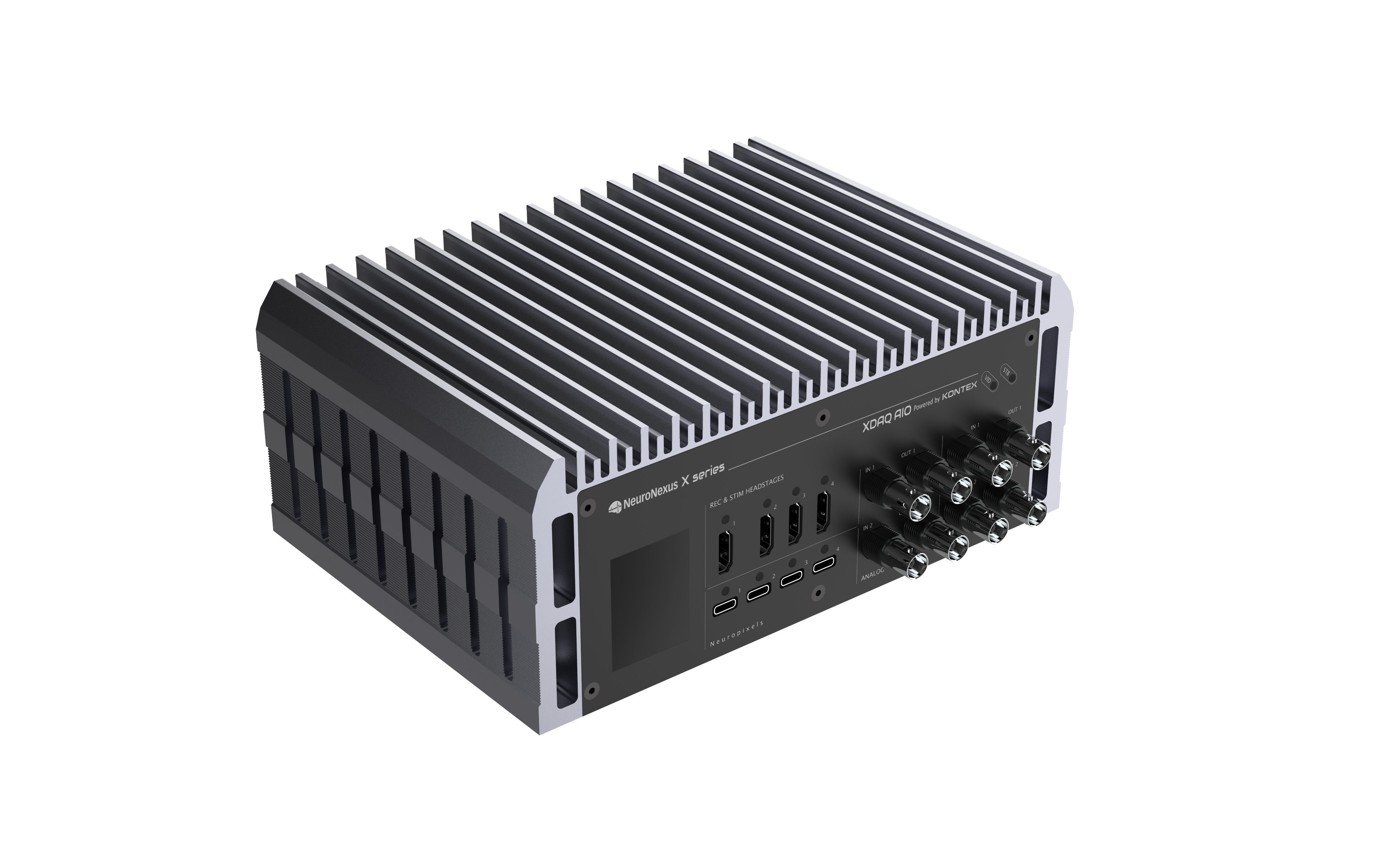
A native Neuropixels probe model in Radiens, mapped to the probe geometry, with XDAQ acquisition and live monitoring.
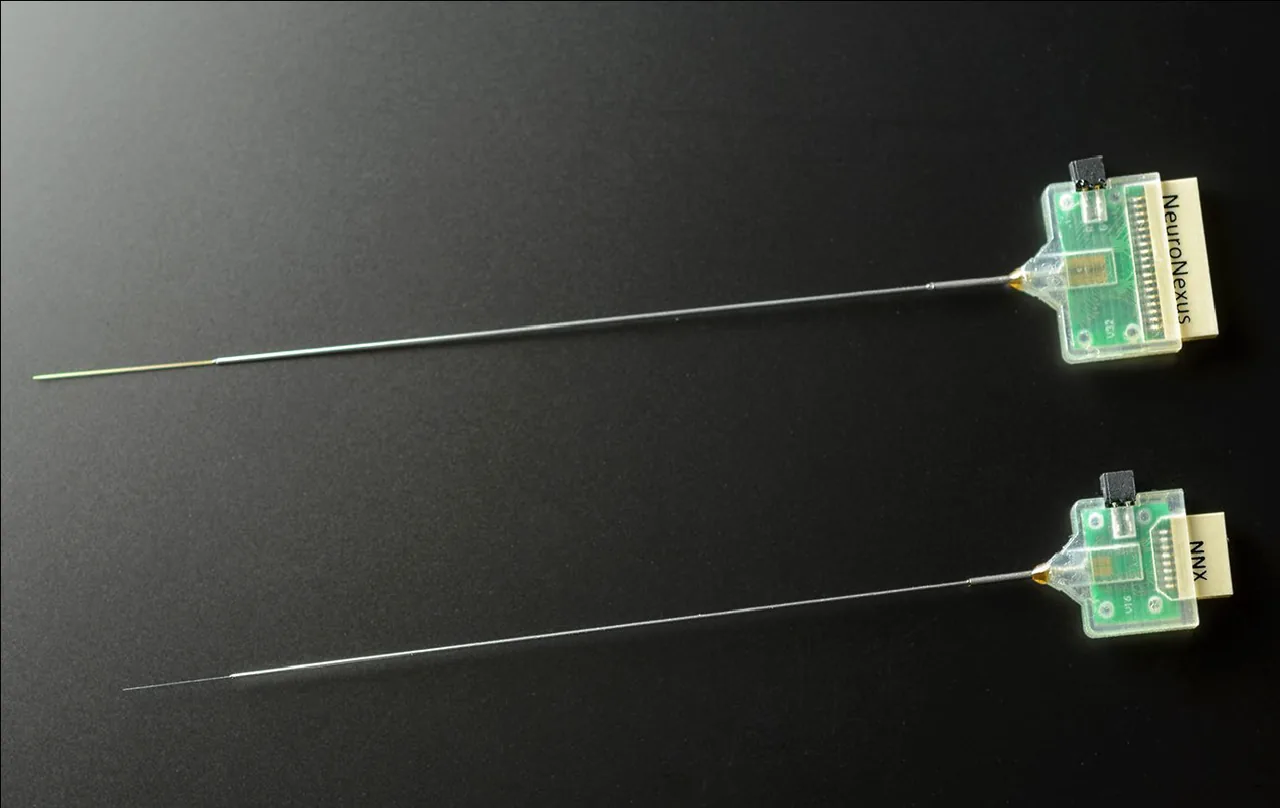
Up to 128 sites, with ruggedized packaging for re-use across recording sessions, for deep targets in large animals.
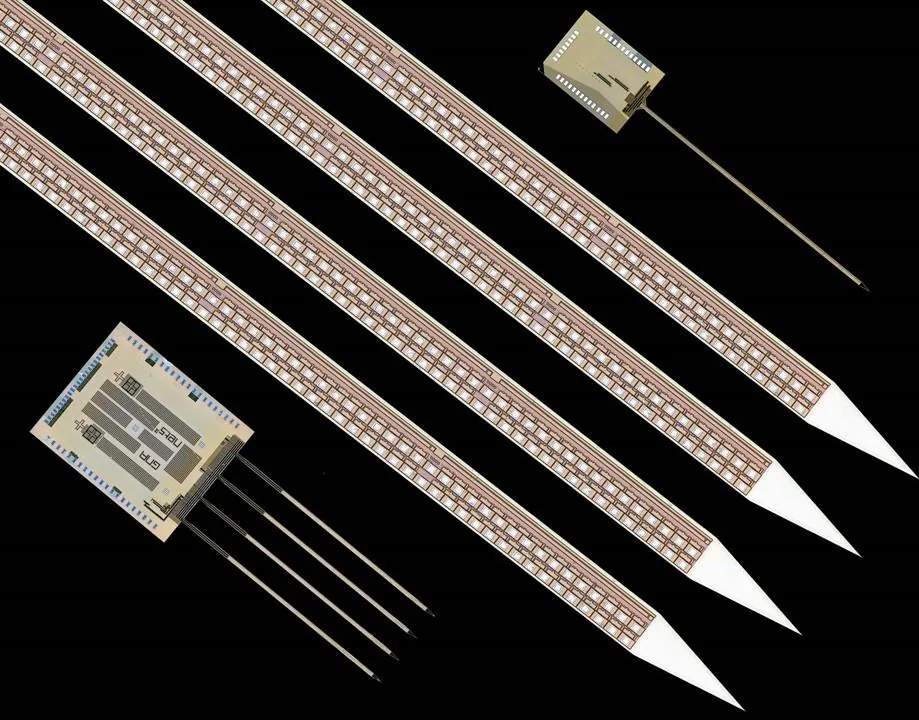
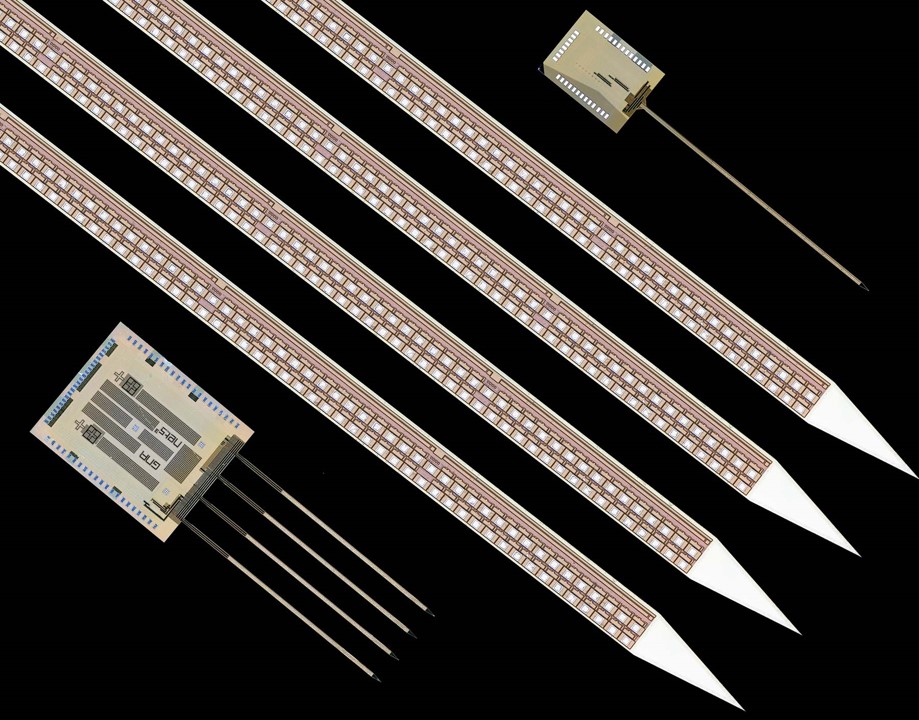
An active pixel under every site, digitized on the shank, 256 to 1,024 sites.
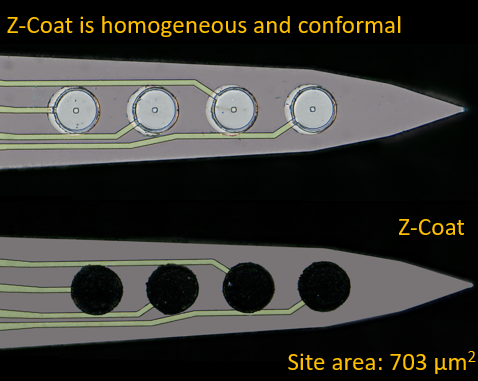
A PEDOT-based coating on the recording site: lower impedance, higher charge capacity, lower noise.
Posts
What NeuroNexus has to say, one thing at a time.
The new neuronexus.com, and our inventory sale
We have rebuilt neuronexus.com around how a lab buys and uses a probe, and we are marking the launch with 25–50% off inventory probes plus bulk discounts.
A brief history of electrode technology
From metal microelectrodes in the 1950s to implanted wire bundles and silicon probes: the papers behind each step, through the founding of NeuroNexus in 2004.
Silicon or wires? Choosing an electrode for multi-channel single-unit recording
Silicon probes and wire bundles both record single units on many channels. How they differ in durability, impedance and channel count, and how to insert one.
What you can order today
Each line below is a catalog product with a datasheet, a custom design quoted from a drawing, or a free download.
Choose a catalog probe for your target
Designs for cortical, deep-brain and surface targets, from a single tetrode to 1,024-site SiNAPS probes.
Record, stimulate with light and deliver a drug from one probe
Optoelectrodes carry an optical fiber, and drug-delivery probes a fluidic channel, beside the recording sites; drug-delivery optoelectrode packages carry both.
Order the probe your experiment needs
Custom geometry, materials and packaging, quoted from a drawing.
Analyze recordings on your own workstation
Radiens Standard is free: acquisition, analysis and curation, with data stored locally.
The programs behind the record
Four research programs, each run with a partner.
Deep-brain stimulation
With Philips Research.
Next-generation probes
With Purdue University.
Organoid electrophysiology
With Harvard University.
Intraoperative neuro-monitoring
With Mayo Clinic.
Where the programs are going
These are directions, not products. Each one appears in the record above when it ships.
Higher channel counts
More channels per experiment, with probe, acquisition and software designed together.
Organoid recording at higher throughput
A higher-throughput successor to the organoid system now launching.
Clinical recording and stimulation
The DBS and neuro-monitoring programs carried into clinical use.
Radiens has its own site.
Radiens, our electrophysiology software, is documented at radiens.ai. Radiens 4 covers acquisition, analysis and curation, and Radiens Standard is free. Compare editions and download it there.