Inventory sale through December 19, and the new neuronexus.com
In-stock B-stock probes 25–50% off and A-stock 15% off on quotes built on the site, through December 19, 2026. How to get the price; what the rebuilt site does.
October 14, 2026 · by Daryl R. Kipke
8 min read
Updated October 28, 2026

NeuroNexus · neuronexus.com · Resources
The NeuroNexus inventory sale runs through December 19, 2026: B-stock silicon probes 25–50% off, in-stock A-stock probes 15% off on quotes built on the site, and enhanced bulk discounts. Every unit on the in-stock list ships now. The sale marks the launch of the rebuilt neuronexus.com, which puts product data, application information, and references on the page, so you can map your experiment to what we make and request a quote from a cart you build.
Research use only. NeuroNexus products are for non-clinical research use and must not be used in human or veterinary medical procedures.
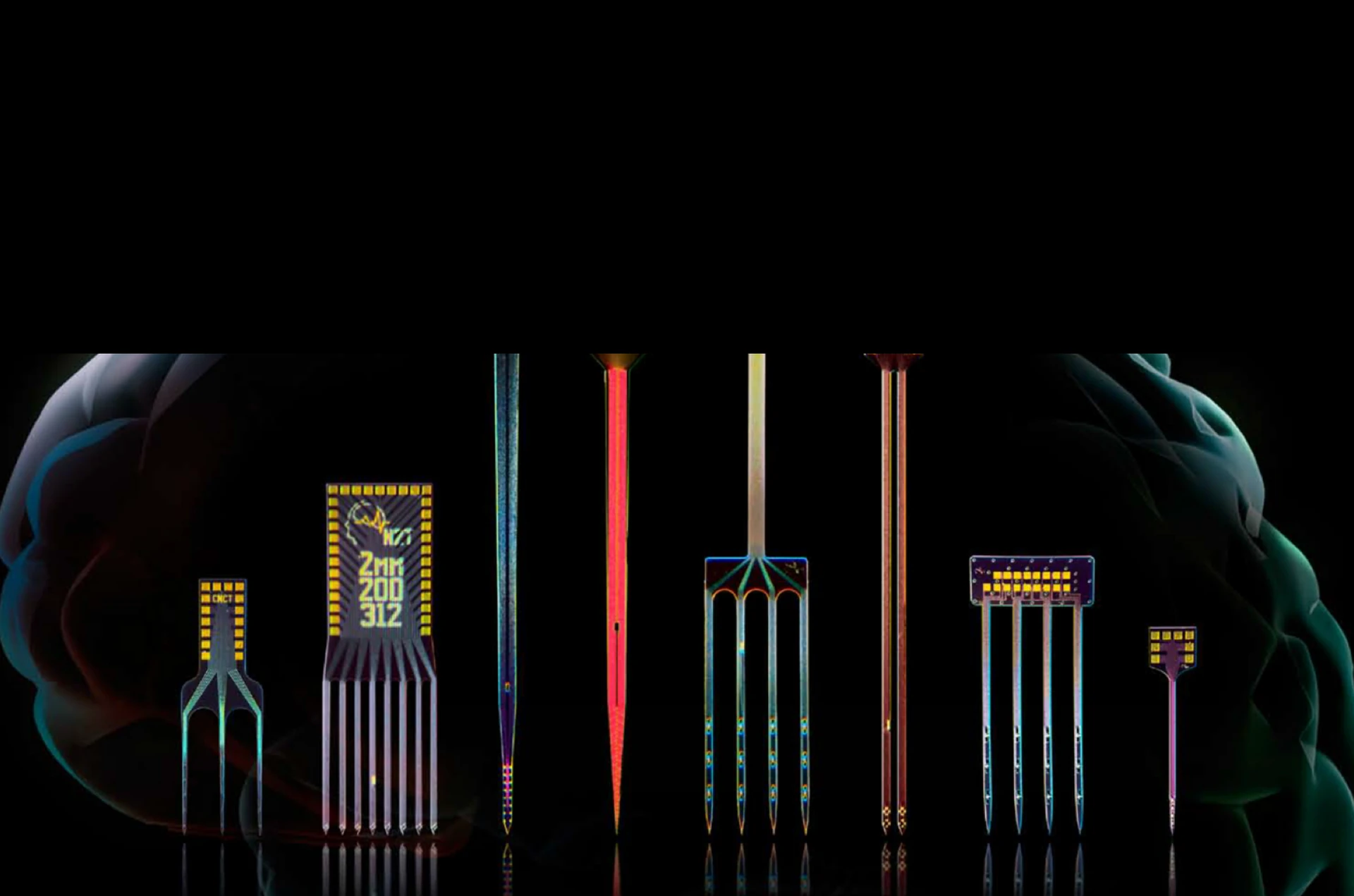
Silicon probe designs from one shank to eight. The in-stock list shows which ship now.
What is on sale, and until when?#
Our annual SfN inventory sale marks the launch of the site. It covers probes and grids in stock, ready to ship; nothing built to order is discounted.
- B-stock probes: 25–50% off. The discount on each unit depends on how many sites are non-conforming and is on your quote.
- In-stock A-stock probes: 15% off when you build the quote on the new site. This is an introductory offer; it ends with the sale, and in-stock A-stock returns to list.
- Enhanced bulk discounts.
The sale runs through December 19, 2026, with your purchase order in hand by then. If you are planning a study for the coming year, or you run the same design repeatedly and want to stock the lab, this is the time to buy.
What is a B-stock probe?#
A B-stock unit is a fully characterized probe with more non-conforming sites than the A-grade criteria allow; that is the only difference from A-stock. Which sites differ is on the design's datasheet when you are signed in, so you can judge whether those sites matter for your recording before you buy. The test every probe goes through is described in What Makes a Thin-Film Electrode Good.
How do I get the sale price?#
- Open the in-stock list. Every unit on it ships now.
- Use the filters to narrow those units to the designs that meet your parameters, or search by the design you already run. If you are choosing a design for the first time, Getting Started with NeuroNexus and the Electrode Finder are the two places to begin.
- Add the units to your cart and request a quote. The quote comes back with the sale pricing applied.
An in-stock unit comes in a specific package, and the package decides which headstage it mates; Choosing a Probe Package settles that before the quote.
Why we rebuilt the site#
Most of the inquiries we get are not orders. They are questions: can a probe reach this target in this species, how does an active probe differ from a passive one, which headstage takes this package, what does the recording look like. Researchers ask them while they are working out what is available and what is possible for the experiment they have in mind. Our Application Scientists answer them every day, and they will keep doing so. But a good share of those answers are facts that should be on the page before anyone has to ask.
That is what the new site is for. It holds more product information, more application information, the product data itself and the references behind them, so you can map your requirements and research ideas to the products and technologies we make, and come to us with the question that is left.
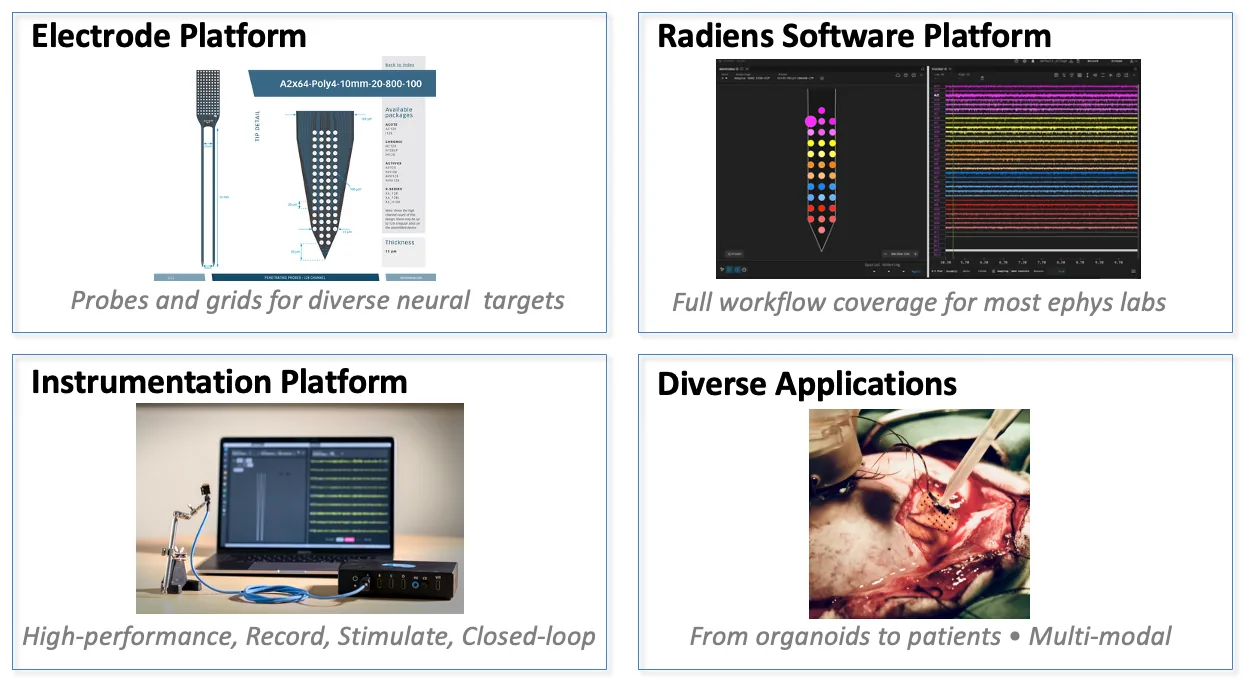
The site is organized around what we make: electrodes, instrumentation, and Radiens software.
What is different on the new site?#
Datasheets: the product data is on the page. Every electrode, recording system, piece of equipment and software product has a datasheet with its specifications, the products it connects to, and the documents that apply to it. For a probe that means the design parameters, the packages it is built in, and the connector and headstage each package mates: the facts a choice turns on, where the choice is made.
Resources: the application information is next to the products. Application notes, solution guides, surgical guides and a glossary of the terms we use, written to answer "can I do this with it" and "how does it work", and linked from the products they describe. Documentation, videos, downloads and the FAQ are one searchable library. For the technology itself, start with NeuroNexus Probe Technology: Questions and Answers.
Connectivity and compatibility guides: what connects to what. Every datasheet names the products upstream and downstream of it, the package a probe is built in, the headstage that package mates, the acquisition system the headstage feeds. The Technical Components hub covers the connectors, adapters, headstages and cables as families, and the guides tell you which package to choose and which adapter joins a package to a headstage, with the pairing in a table rather than a phone call.
Electrode Finder: narrow the catalog by the ranges that matter. The Electrode Finder takes the site count, pitch, depth and shank layout your experiment needs and shows which probe and grid designs fall inside those ranges, across the whole catalog at once. The Electrode Design Space explains the parameters it works in.
Webstore: browse, filter and quote from a cart. The Webstore is the full catalog, searchable by SKU, name or keyword and filtered by category and design parameters. Add products as you browse and submit the cart as a quote request; our team returns a quote with the discounts you qualify for already applied, and you do not have to know a SKU before you ask.
Your history stays with you. Sign in and your quotes and your conversations with us are kept together, so the quote from last month and the question you asked about it are on the same page when you come back.
Our team is one click away. Every product page and every document has a way to ask us. An Application Scientist or an engineer answers by inquiry or by phone, as before.
Describe the experiment, and see what fits#
There is one more way in, and it is the one I expect many of you will use first. Describe the recording you want to make, the target, the species, the preparation, what you need to see in the data, and you get matched suggestions with links to the specific products and documents behind them.
What answers is an agent we built, called Oaks, grounded in our detailed product information, the applications our probes are used in, and the documentation and references on this site. It reasons over the same datasheets, application notes and glossary you can read yourself, and it shows you where its suggestions come from. We built it because the questions researchers bring us are specific to their experiment, and the right answer is usually a combination of a product, a configuration and a document that no catalog page holds on its own.
Two things to know. It suggests and points; it does not specify. Like any assistant that generates answers, it can be wrong, so check the sources it gives you, and treat what it returns as the start of the conversation, not the end. And it is not a replacement for our Application Scientists: it is how we make their kind of answer available at any hour, in any timezone, and the human path is one click away whenever you want it.
This is early. We are building it in the open, on the site, and it will get better as you use it and tell us where it fell short.
What I would like from you#
The site is new, and you will find things we missed, and questions it does not yet answer. Tell us, through the contact form or by replying to any of our emails. Every question we get is a page we should write, and the site will change because of it.