Recording Neuropixels on XDAQ: Headstage to Recording
Neuropixels data acquisition on XDAQ: the Kontex NP Headstage, the Commutator PRO for freely moving work, and the Open Ephys plugin.
6 min read
Updated November 14, 2026

NeuroNexus · neuronexus.com · Resources
XDAQ records Neuropixels 1.0 and 2.0 probes in its NP mode, with Kontex's acquisition software and its Open Ephys plugin. The Kontex NP Headstage connects the probe, and the Commutator PRO keeps up to four Neuropixels probes untwisted on a freely moving animal while a passive probe stimulates.
Research use only. NeuroNexus products and the procedures described here are for non-clinical research use, and must not be used in human or veterinary medical procedures.
Neuropixels probes are made by imec and acquired on imec's own PXIe card or OneBox. XDAQ is a second route, engineered and manufactured by Kontex and commercialized by NeuroNexus, and it is the route to take when the same rig also records or stimulates through passive probes, or runs freely moving animals on a commutator.
The chain#
Neuropixels probe → Kontex NP Headstage → [Commutator PRO] → XDAQ (NP mode)
   → Kontex acquisition software (Open Ephys plugin) → recording on disk
Each link is a product with a datasheet. The Commutator PRO is the one optional link, for freely moving animals.
Which XDAQ?#
Every XDAQ runs in three modes: record (XR), record-and-stimulate (XSR) and Neuropixels (NP). The NP column sizes the system for Neuropixels; the other two size it for the passive probes on the same rig.
| NP — Neuropixels | XR — record | XSR — record and stimulate | |
|---|---|---|---|
| XDAQ ONE+ | up to 4 probes (2 or 4 ports) | 512 or 1,024+ channels | 64 or 128 channels |
| XDAQ CORE2 | up to 2 probes | 512 channels | 16 or 32 channels |
| XDAQ ALL-IN-ONE | up to 4 probes | 1,024+ channels | 64 or 128 channels |
The ONE+ is ordered with two or four Neuropixels ports, each with its own status light. The CORE2 runs on USB-C power and moves between rigs. The ALL-IN-ONE adds synchronized video and four LED drivers for optogenetics. All three record Neuropixels at the fixed rates of the probe. An XDAQ runs one mode at a time, so it does not acquire Neuropixels probes and X-Series headstages at the same time (XDAQ ONE+ manual). The full specification is in X-Series XDAQ System Overview.
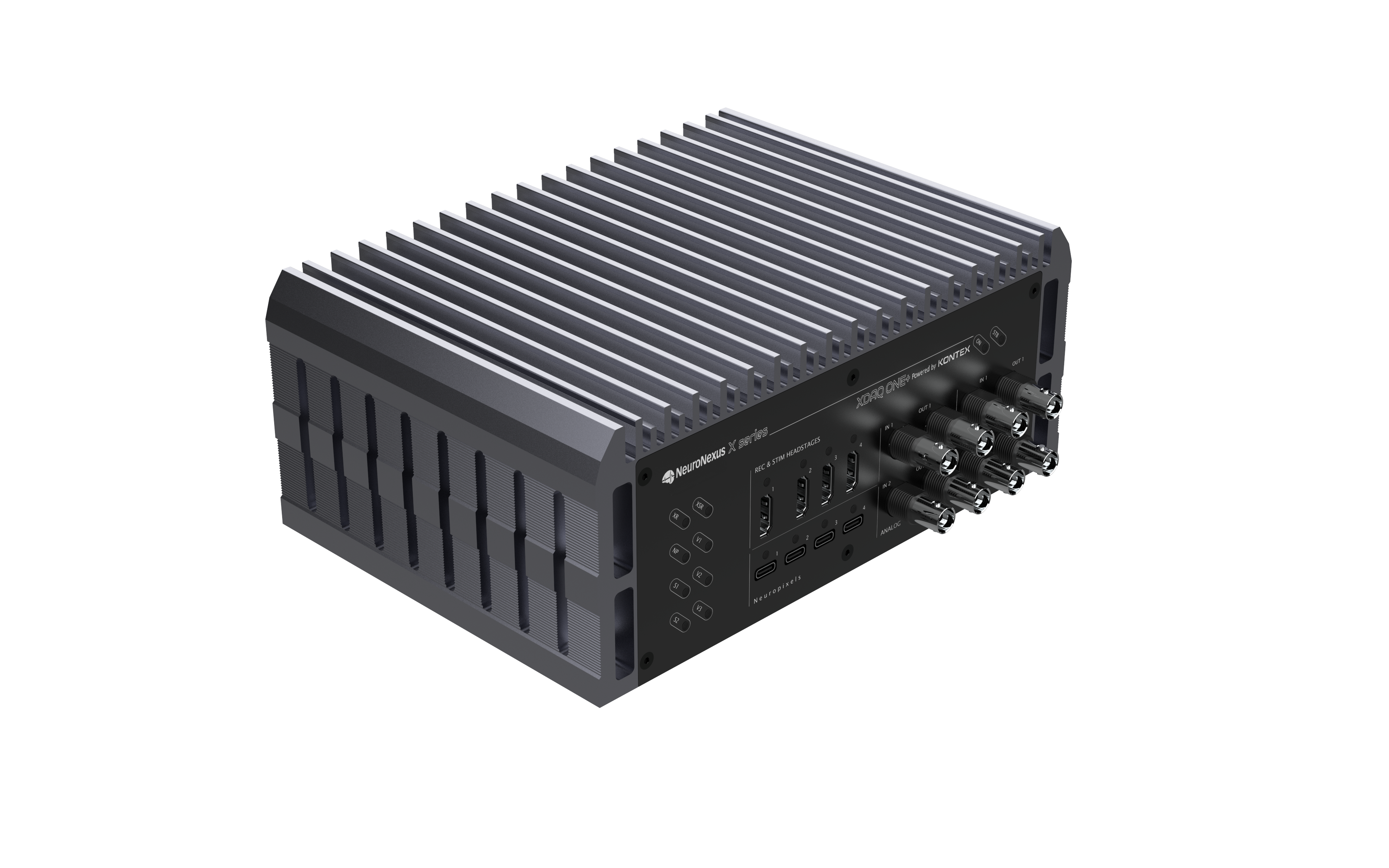
Figure 1. XDAQ ONE+, the XDAQ with four Neuropixels ports.
The headstage#
The Kontex NP Headstage is a lightweight interface board for Neuropixels 1.0 and 2.0 probes. The probe's flex cable docks into it, metal pads facing down, and the headstage connects to XDAQ directly or through the Commutator PRO, into one of the four Neuropixels ports by USB-C. Kontex designed it for XDAQ and the Commutator PRO, with a cable about 40 percent lighter than imec's stock cable, which lowers the weight on a freely moving mouse.
The commutator, for freely moving animals#
A tethered animal twists its cable, and a commutator lets the cable turn with it. The Commutator PRO is motorized: an onboard microprocessor senses rotation, from a gyroscope on the animal side or a Hall sensor on the rotor, and turns the motor to cancel the torque, so the animal supplies no force and the recording stays stable. It has up to four Neuropixels ports and, through its HDMI port, a connection for a passive probe on an X-Series headstage of up to 128 recording or 32 record-and-stimulate channels, with up to nine GPIO lines by model and an optional 5 mm passthrough for a fiber or a fluid line. One joint therefore serves Neuropixels recording and stimulation through a passive probe at once, in an animal that moves freely. The Standard Commutator, which is passive, has no Neuropixels ports.
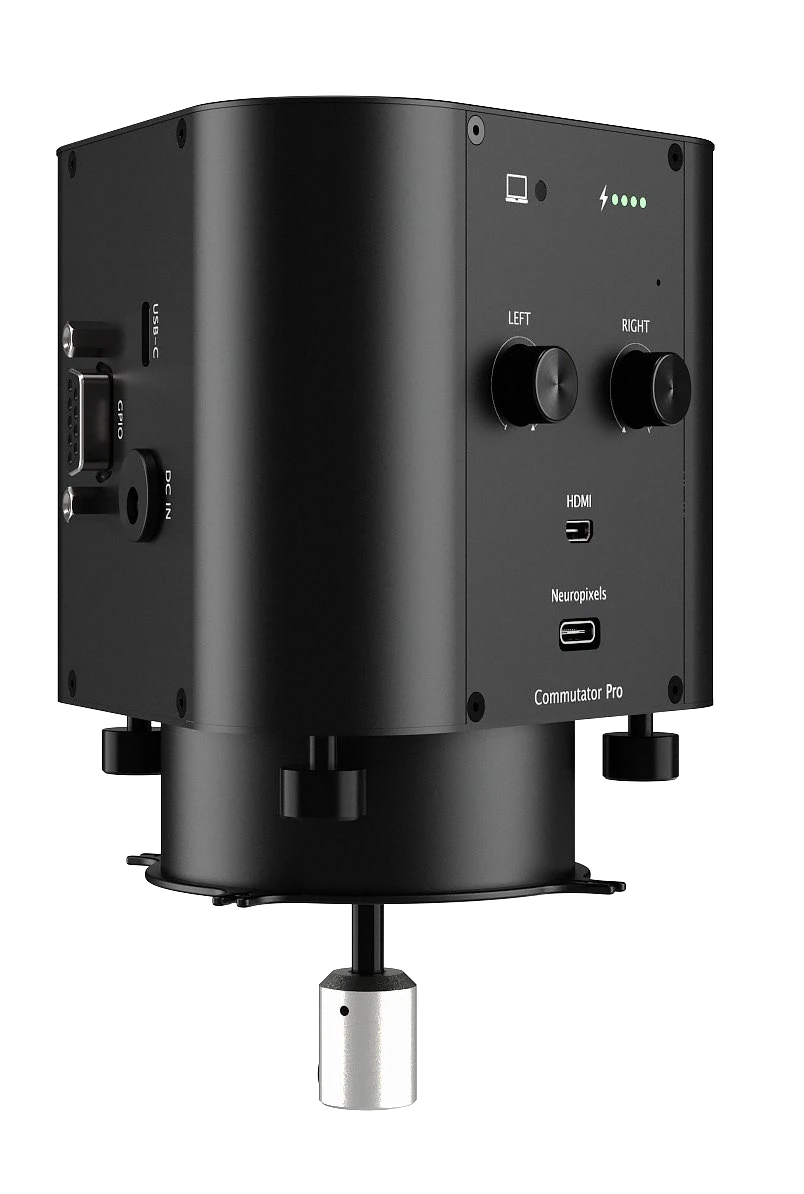
Figure 2. The Commutator PRO: up to four Neuropixels ports and a passive probe through one torque-compensated joint.
Acquisition software#
XDAQ in NP mode is run by Kontex's acquisition software, which uses the XDAQ Neuropixels plugin for Open Ephys for the probe interface. Install the plugin from Kontex, connect the PC, and XDAQ appears as the acquisition device; probe settings, site selection and recording are set there. The setup, LED by LED, is in the XDAQ ONE+ manual. Passive probes record in XR or XSR mode, on an XDAQ that is not running in NP mode at the same time.
Analysis in Radiens#
The recording opens in Videre, the analysis application in Radiens ↗, after the session, without a Neuropixels probe model, so the channels are not placed on the probe. Radiens support for Neuropixels, including a probe model and following a recording live, is in development.
Adding a second probe that stimulates#
Neuropixels records only (Jun et al. (2017) ↗; Steinmetz et al. (2021) ↗). Stimulation goes through a passive probe with stimulation-rated sites and an X-Series record-and-stimulate headstage, on the HDMI port of the Commutator PRO in a freely moving animal. Because an XDAQ runs one mode at a time, the stimulating probe is acquired by a second XDAQ in XSR mode, separate from the XDAQ that records the Neuropixels probes. Which passive probe, and how the dense passive designs compare with Neuropixels in their own right, is set out in Neuropixels, SiNAPS and Silicon Probes: How to Choose.
What to order#
- XDAQ ONE+ (
daq_ktx--xdaq-onep) or ALL-IN-ONE (daq_ktx--xdaq-aio) for up to four Neuropixels probes, or CORE2 (daq_ktx--xdaq-core2) for up to two. - A second XDAQ in XSR mode, when a passive probe stimulates while the Neuropixels probes record.
- Kontex NP Headstage (
hst_xsr--np), one per probe. - Commutator PRO (
con_ktx--comp) for freely moving work. - The Neuropixels probes themselves, from imec.
An Application Scientist matches the XDAQ model and the commutator to the probe count and the passive channels. A quote request with the items above, or a message through Contact, starts that conversation.
Related documents#
- Neuropixels, SiNAPS and Silicon Probes: How to Choose
- X-Series XDAQ System Overview
- XDAQ ONE+ user manual
- Neural Recording Chips: A Guide to DAQ ASICs
- High-Density Recording: A Planning Guide
Citations#
- Steinmetz, N. A., et al. (2021). Neuropixels 2.0: A miniaturized high-density probe for stable, long-term brain recordings. Science 372, eabf4588. 10.1126/science.abf4588 ↗
- Jun, J. J., et al. (2017). Fully integrated silicon probes for high-density recording of neural activity. Nature 551, 232–236. 10.1038/nature24636 ↗