Fusion Double-Sided Probes
360° electrode coverage, twice the active sites — drop-in compatible with existing DAQ systems
Twice the Active Sites, Both Faces
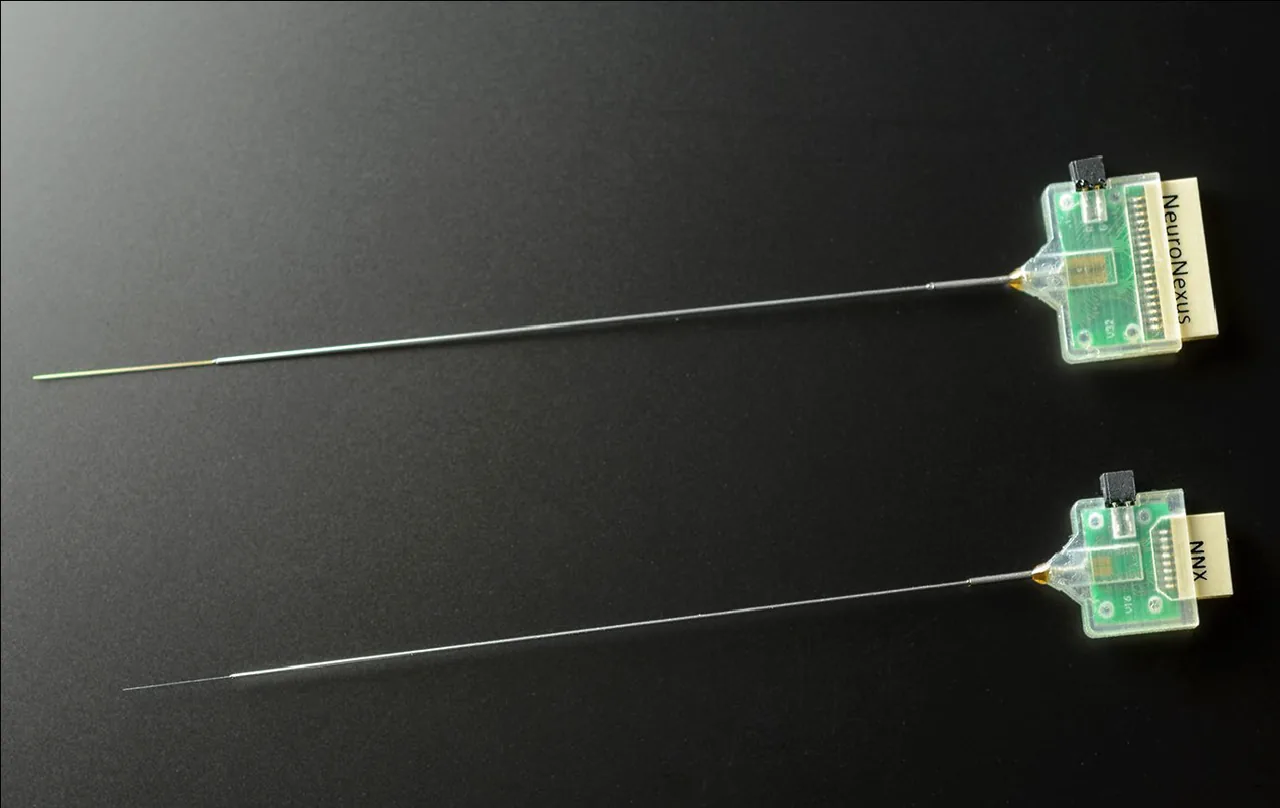
Two catalog probes assembled back to back give 360° coverage and twice the active sites, for richer data from fewer animals. Drop-in compatible with existing DAQ and analysis workflows.
Why Choose Fusion Probes
Double-sided electrode architecture for demanding recordings
360° Surround Sampling
Electrodes on both substrate faces eliminate blind spots inherent in single-sided designs.
Drop-In DAQ Compatibility
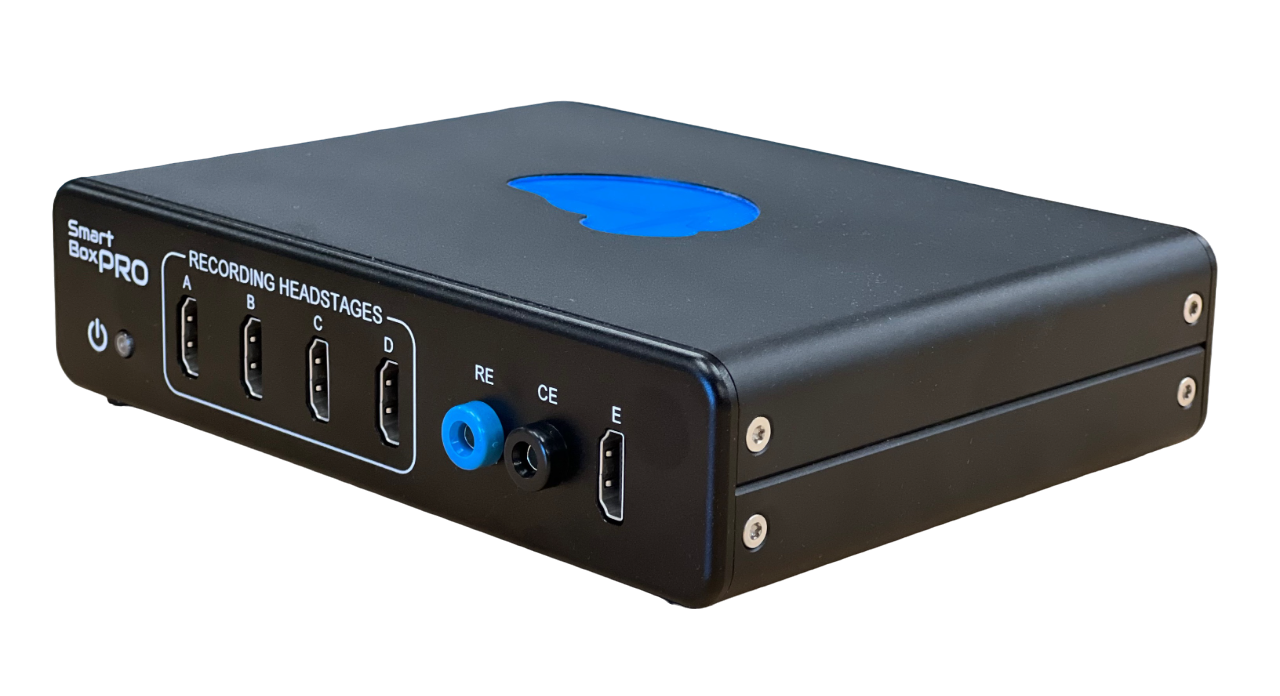
Standard connectors — works with XDAQ, Smartbox, Open Ephys, Intan pipelines.
Twice the Active Sites per Insertion
Twice the recording sites from one penetration: richer data from fewer animals.
More Data per Animal (3Rs)
More active sites per insertion means fewer animals: Reduce, Refine, Replace.
5,000+ Peer-Reviewed Citations
NeuroNexus probes cited across the global neuroscience research community.
100+ Catalog Designs + Custom
Off-the-shelf or custom Fusion probes tailored to your neural target.
Technical Specifications
32–128 channels, acute and chronic form factorsChannel counts from 32 to 128, 1–8 shanks per probe, acute (stiff) and chronic (flexible cable) form factors.
Channel Configuration
32, 64, or 128 channels with linear (laminar) or polytrode site layouts.
- 1–8 shanks per probe
- Implantable length: 3–10 mm
Physical Properties
Substrate: 30 µm or 100 µm. Site material: standard iridium; custom Z-Coat.
- Double-sided electrode placement (360° coverage)
Form Factors
Acute (stiff), or chronic with a 30 mm flexible cable; cable or no cable.
- Both form factors microdrive-compatible
DAQ Compatibility
Standard headstage connector across all F-series packages.
- XDAQ, Smartbox, Open Ephys, Intan, others
- No specialized software required
F-Series Package Options
F = acute, FH = integrated headstage, FW = wide/dual-output
Proven in Research
5,000+
Peer-reviewed publications citing NeuroNexus probes
100+
Existing Fusion probe designs available off-the-shelf
1,000+
Research institutions worldwide using NeuroNexus electrodes
22 years
Designing, manufacturing, selling and supporting neural probes
Application Areas
Double-sided electrodes open spatial sampling and multi-region studies constrained by site count on single-sided probes.
Laminar Cortical Profiling
All cortical layers simultaneously. CSD analysis and layer-specific firing patterns.
- Captures activity gradients single-sided probes miss
Population Dynamics
Twice the active sites per shank for high-yield single-unit isolation from one penetration.
Multi-Region Recording
Multi-shank Fusion probes span brain regions with 360° sampling at each site.
Chronic Neural Interfaces
Flexible packages for freely moving experiments. Higher density adds signal redundancy.
Radiens + Fusion: Analysis from Probe to Software
Radiens sorts spikes on both faces of the probe, tracks per-site signal quality during acquisition, and follows long-term signal on chronic Fusion implants.
Probe-Aware Geometry
Radiens loads the Fusion probe's double-sided electrode map automatically. Both recording faces visualized in their anatomical context.
Signal Quality for Double-Sided Arrays
Per-site SNR monitoring across both probe faces. Verify recording quality on the two faces' electrode populations independently.
Choose Your Form Factor
Fusion probes available in acute and chronic configurations
| Feature | Fusion Acute (Stiff) | Fusion Chronic (Flexible) |
|---|---|---|
| Primary Use Case | Acute/terminal recordings | Chronic implants, freely moving |
| Experiment Duration | Single session or repeated acute | Weeks to months post-implant |
| Construction | Rigid assembly | Flexible cable (30 mm) |
| Handling | Repeated insertion/withdrawal | Single implant + long-term stability |
| Microdrive Compatible | ✅ With insertion assist tooling | ✅ Standard compatibility |
| Signal Stability | Excellent within-session | Stable across weeks/months |
| Connector Type | Standard headstage | Standard headstage + strain relief |
| DAQ Compatibility (No Retooling) | ✅ All standard systems | ✅ All standard systems |
| Software Requirements | Standard analysis pipelines (no retraining) | Standard analysis pipelines (no retraining) |
Find Your Configuration
Select Your Configuration
Four parameters define your configurationChannel count, shank count, site layout, and form factor. All configurations work with existing DAQ systems.
Channel Count
32, 64, or 128 channels based on spatial sampling and DAQ capacity.
Shank Configuration
Single shank or multi-shank (2–8) for simultaneous multi-region sampling.
Site Layout
Linear (laminar) for layer profiling or polytrode for unit density.
Form Factor
Acute (rigid) for terminal experiments or chronic (flexible) for freely moving.
Twice the active sites, same DAQ, same analysis pipeline
Additional Resources
What you need to get started with Fusion probes
Papers citing the use of Fusion Probes
Talk to a scientist about Fusion Probes
These are advanced configurations — tell us your experiment and we'll help you get it right.
Fusion Probes — FAQ
What is a Fusion probe?
Two silicon probes assembled back to back, with front- and back-facing recording sites for 360° coverage and improved single-unit isolation.
Why double-sided?
Sites on both faces sample a larger tissue volume and improve spike sorting and unit isolation compared with single-sided probes.
How do I choose a Fusion probe configuration?
Browse available Fusion probes in the webstore, or request a custom design from an application scientist.