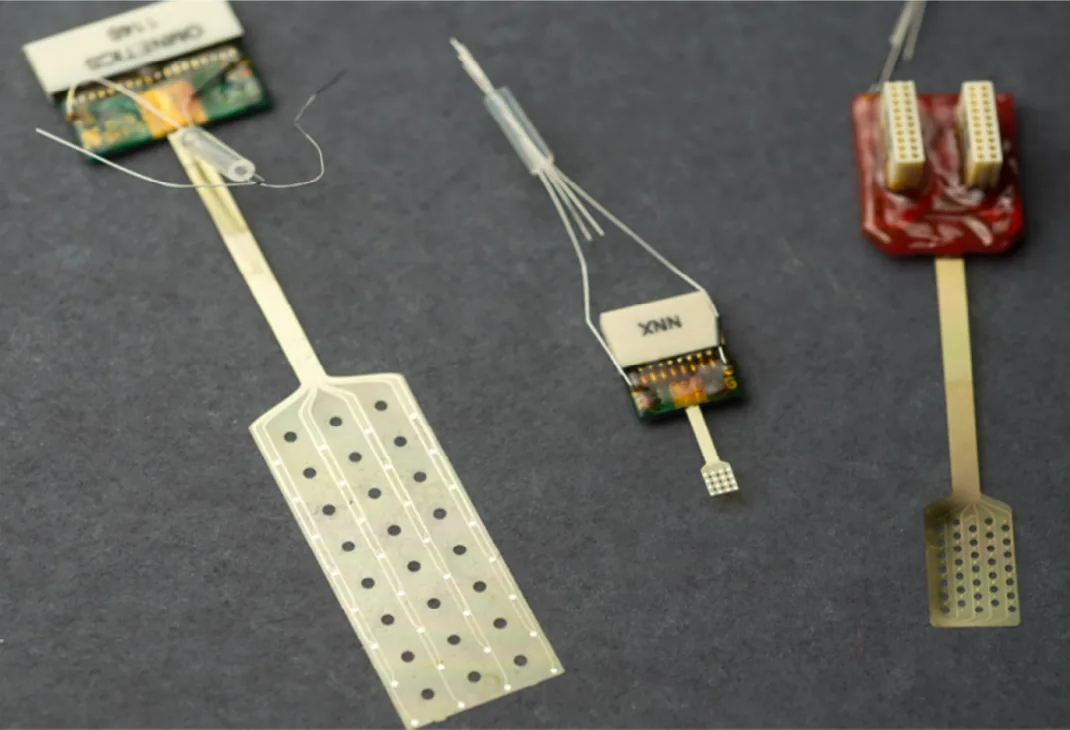
Grid Electrodes
50+ grid designs for ECoG, EEG, cardiac and nerve recording, on 12 µm polyimide substrate that conforms to the tissue surface.
NeuroNexus makes grid electrodes in more than 50 catalog designs, for research use. Custom designs are available. NeuroNexus electrodes are cited in more than 5,200 peer-reviewed papers.
ECoG, EEG, and cardiac grids. Plus nerve cuffs
Same core thin-film technology across all grid types.
ECoG Series
12 µm polyimide grids for the cortical surface, epidural or subdural; 4 to 256 sites, 25 µm to 1 mm
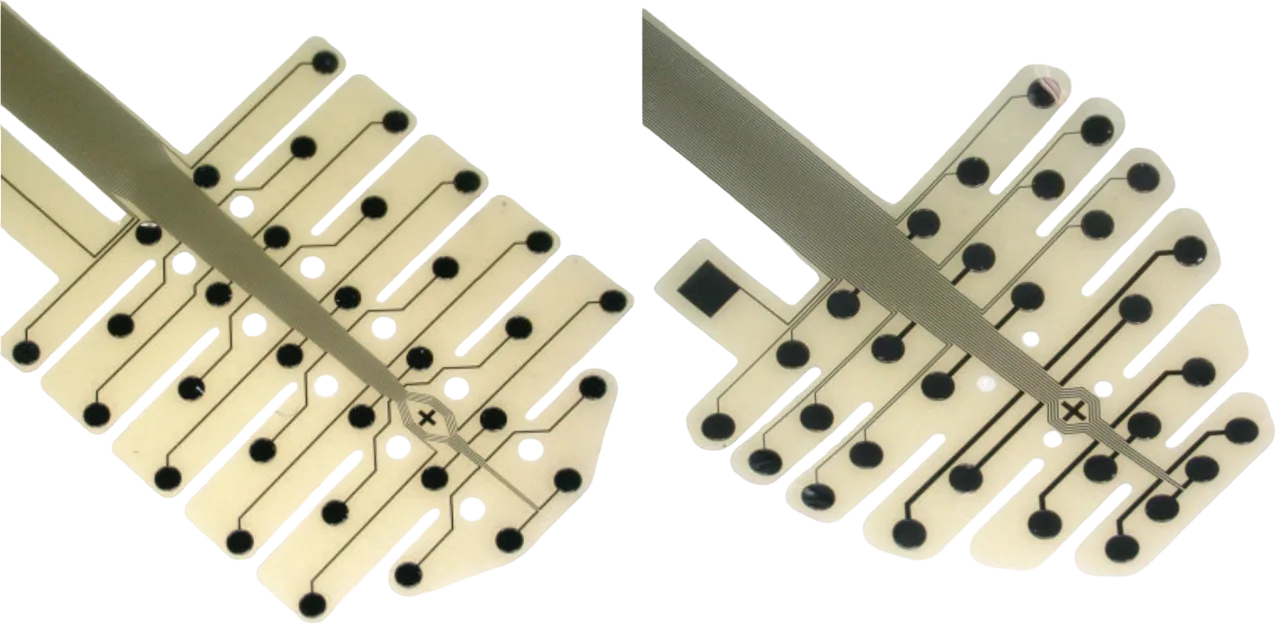
EEG Series
12 µm polyimide EEG arrays for the skull surface, no craniotomy; 6 to 32 sites for mouse and rat

Cardiac Surface Grid Series
12 µm polyimide grids for the epicardium; accordion and segmented layouts hold contact through the beat

Nerve-Cuff Series
12 µm polyimide cuffs pre-curved to wrap a peripheral nerve; the diameter is chosen, not adjusted
Grid families compared
Compare the 4 grid families: designs and sites
| Family | What it is | Catalog designs | Sites |
|---|---|---|---|
| ECoG Series | 12 µm polyimide grids for the cortical surface, epidural or subdural; 4 to 256 sites, 25 µm to 1 mm | 33 | 4 to 256 |
| EEG Series | 12 µm polyimide EEG arrays for the skull surface, no craniotomy; 6 to 32 sites for mouse and rat | 9 | 6 to 32 |
| Cardiac Surface Grid Series | 12 µm polyimide grids for the epicardium; accordion and segmented layouts hold contact through the beat | 5 | 16 to 128 |
| Nerve-Cuff Series | 12 µm polyimide cuffs pre-curved to wrap a peripheral nerve; the diameter is chosen, not adjusted | 6 | 3 to 24 |
From grid electrode to data
Grids record into Radiens through any compatible headstage. Radiens is free to start.
Documents for grid electrodes
Guides, surgical guides, and application notes (7)
| Document | What it covers |
|---|---|
| Thin-Film Grids for Surface Recording | What a grid records, where it sits, and how the site layout follows the target. |
| Surgical Guide: Thin-Film Grids, ECoG Implantation | Craniotomy, epidural or subdural placement, fixation, and closure. |
| Surgical Guide: Thin-Film Grids, EEG Implantation | Skull-surface placement without a craniotomy; the connector pedestal. |
| Thin-Film Grids: EEG Referencing Techniques | Reference and ground choices, and what each does to the recorded signal. |
| Skull-Surface EEG in Rats with a Thin-Film Grid | An application note: the preparation, the recording, and the result. |
| Thin-Film Grid Electrodes: Setup, Handling, Cleaning and Care | Inspect, measure impedance, connect, verify, clean in order, and store flat. |
| What Makes a Thin-Film Electrode Good | Materials, the insulating layer, site metal, and the fabrication details that decide quality. |
Papers citing NeuroNexus
More than 5,200 peer-reviewed papers cite NeuroNexus electrodes. Bioz indexes them with their figures, searchable by technique.
Thin-film grids — FAQ
What's the difference between ECoG and EEG here?
ECoG grids sit directly on the cortical surface; EEG arrays record from the scalp or outer surface. Both are thin-film surface arrays.
Does a mouse EEG grid need a craniotomy?
No. The thin-film grid sits on the intact skull over the recording area, with no bone removed. Bone screws placed clear of the grid anchor the implant and provide the ground and reference, and the grid is cemented at its edges and at the cable exit.
How long does a mouse EEG grid implant last?
It records for weeks to months, so a biomarker can be followed through development, or a treatment measured against a baseline, on the same implant. Impedance that rises over weeks usually means the cement is lifting at an edge.
What is a grid electrode?
A grid electrode is a flexible array of electrode sites in a precise grid layout that is placed on a tissue surface, where it records field potentials or delivers stimulation without penetrating the tissue. It is a surface neural probe, known as an ECoG grid or ECoG array on the cortex and as an EEG grid on the skull, and it is also used on the spinal cord and peripheral nerves.
Which headstage and acquisition system does a grid need?
The package decides. Each grid design is built on a package that fixes its connector and its channel count, 16 to 256 channels, and it mates the same headstages as a silicon probe. Pin the package in the Connection Finder to list every headstage and acquisition system it reaches, and any adapter between them; a 32-site mouse EEG grid on an H32 package, for example, runs on a SmartLink 32 or X3R 32 headstage with Smartbox Pro or XDAQ.
Can a thin-film grid record and stimulate?
Yes. All four grid families, ECoG, EEG, cardiac and nerve cuff, record and stimulate through platinum sites 25 µm to 1 mm across. Stimulation runs through an X-Series record-and-stimulate headstage on XDAQ.
Find the right grid for your preparation
Tell us the species, the placement, and the channel count. An Application Scientist will reply with designs that fit.